Tokyo's 8 best kaiten-zushi spots for 2026, picked by locals. Plates from ¥110, English menus, short waits, with maps, official sites, and Japanese reviews.
Introduction
Tokyo has hundreds of kaiten-zushi (回転寿司) restaurants, what Australians call a sushi train, and some are tourist traps. Below are the 8 best conveyor belt sushi restaurants in Tokyo, hand-picked by locals: budget chains with plates from around ¥110, premium Hokkaido seafood, and high-tech bullet-train delivery.
Each pick has a Google Maps link, official site, and translated Japanese reviews. Branches re-checked October 2026; plate prices verified for Sushiro and Kura. Tap any name in the tables below to jump straight to its full review.
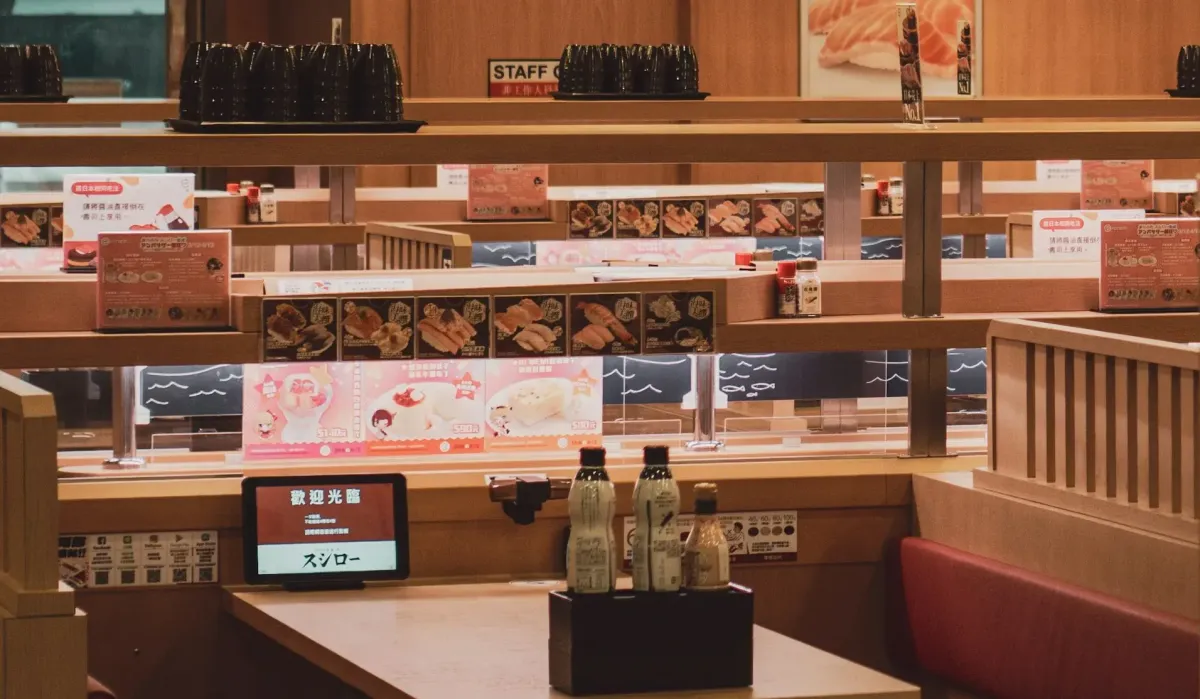
Conveyor belt sushi by station
Find your station or area below, then tap a name for the full review. Walking times are from the station or exit named in each review.
| Station / area | Closest pick from this guide | Walk | Area guide |
|---|---|---|---|
| Shibuya | Sushiro Shibuya Ekimae / Midori Sushi (Mark City) / Uobei | Sushiro: right by JR Shibuya Station; Midori: inside Mark City, connected to the station; Uobei: 3 min from Hachiko Exit | Shibuya guide |
| Shinjuku / Higashi-Shinjuku | Kaiten Sushi Misaki | 4 min from Higashi-Shinjuku Exit A3 | Shinjuku guide |
| Ueno / Okachimachi | Genki Sushi × Uobei Ueno | 3 min from JR Ueno | Ueno guide |
| Akihabara | Genki Sushi × Uobei Ueno (nearest pick in this guide; Sushiro also has a station-front branch, see the Akihabara guide) | 2 stops by JR (via Okachimachi) to Ueno | Akihabara guide |
| Tokyo Station / Marunouchi | Nemuro Hanamaru (KITTE) | 1 min from Marunouchi South Exit | No area guide yet |
| Asakusa | Kura Sushi Asakusa ROX | 5 min from Asakusa Station | No area guide yet |
| Omotesando / Harajuku | Heiroku Sushi | 5 min from Meiji-jingumae | No area guide yet |
No pick near Ikebukuro in this guide; Sushiro has a branch there, and our ranking of Japan's sushi chains compares the brands.
Quick picks (if you are in a hurry)
Tap a name to jump to its full review.
| # | Restaurant | Area | Price/plate | Best for | Official site |
|---|---|---|---|---|---|
| 1 | Sushiro | Shibuya / city-wide | ¥150–360 | Best overall value | akindo-sushiro.co.jp |
| 2 | Nemuro Hanamaru | Tokyo Station | ¥170–600 | Premium Hokkaido seafood | sushi-hanamaru.com |
| 3 | Genki Sushi × Uobei Ueno | Ueno | ¥110–360 | Bullet-train lane delivery | genkisushi.info |
| 4 | Kura Sushi (Asakusa ROX) | Asakusa | ¥145–260 | Family fun + gacha game | kurasushi.co.jp |
| 5 | Midori Sushi | Shibuya | Sets ¥1,980–3,630 | Sit-down sushi (no belt) | sushinomidori.co.jp |
| 6 | Heiroku Sushi | Omotesando | ¥140–350 | No-frills budget pick | heiroku.jp |
| 7 | Uobei | Shibuya | ¥110–360 | Triple high-speed lanes | uobei.info |
| 8 | Kaiten Sushi Misaki | Shinjuku | ¥119–500 | Market-fresh from Misaki port | Tabelog |
For a deeper look at Tokyo's sushi scene beyond kaiten-zushi, check out our complete guide to the best sushi in Tokyo.
1. Sushiro (スシロー) — ¥150 plates, English touchscreen, open until 23:00
Sushiro is Japan's largest conveyor belt sushi chain by revenue, and for good reason. The quality-to-price ratio is genuinely hard to beat anywhere in Tokyo. Plates start at ¥150 (tax included), and even at that price point the fish is surprisingly fresh — the chain sources directly from markets across Japan and processes at high volume, which keeps everything moving.
What to order
The maguro (tuna) trio plate is a great starting point — akami, chutoro, and a tuna gunkan on one plate. The grilled unagi (eel) with sweet sauce is another standout, and the seasonal special menu rotates every few weeks. Don't skip the side dishes — the ramen and karaage (fried chicken) are both solid.
Practical info
- Featured branch: Sushiro Shibuya Ekimae (渋谷駅前店) — closest to JR Shibuya Station. 30+ other Tokyo locations including Shinjuku, Ikebukuro, Shinagawa, Akihabara
- Hours: Shibuya Ekimae: Mon–Fri 11:00–23:00, Sat–Sun & holidays 10:30–23:00 (varies by location)
- Price: ¥150–360 per plate; expect ¥1,000–2,500 per person
- Reservation: Sushiro app (English-friendly). Walk-ins possible but expect 30–60 min waits at peak hours
- English menu: Full touchscreen support
- 🌐 Official site (Shibuya Ekimae)
- 📍 View on Google Maps
Insider tip
Visit on weekdays between 14:00–17:00 to avoid crowds. The app gives you a numbered ticket — you can wander the neighborhood and come back when your number is close. Push notification when your table is almost ready.
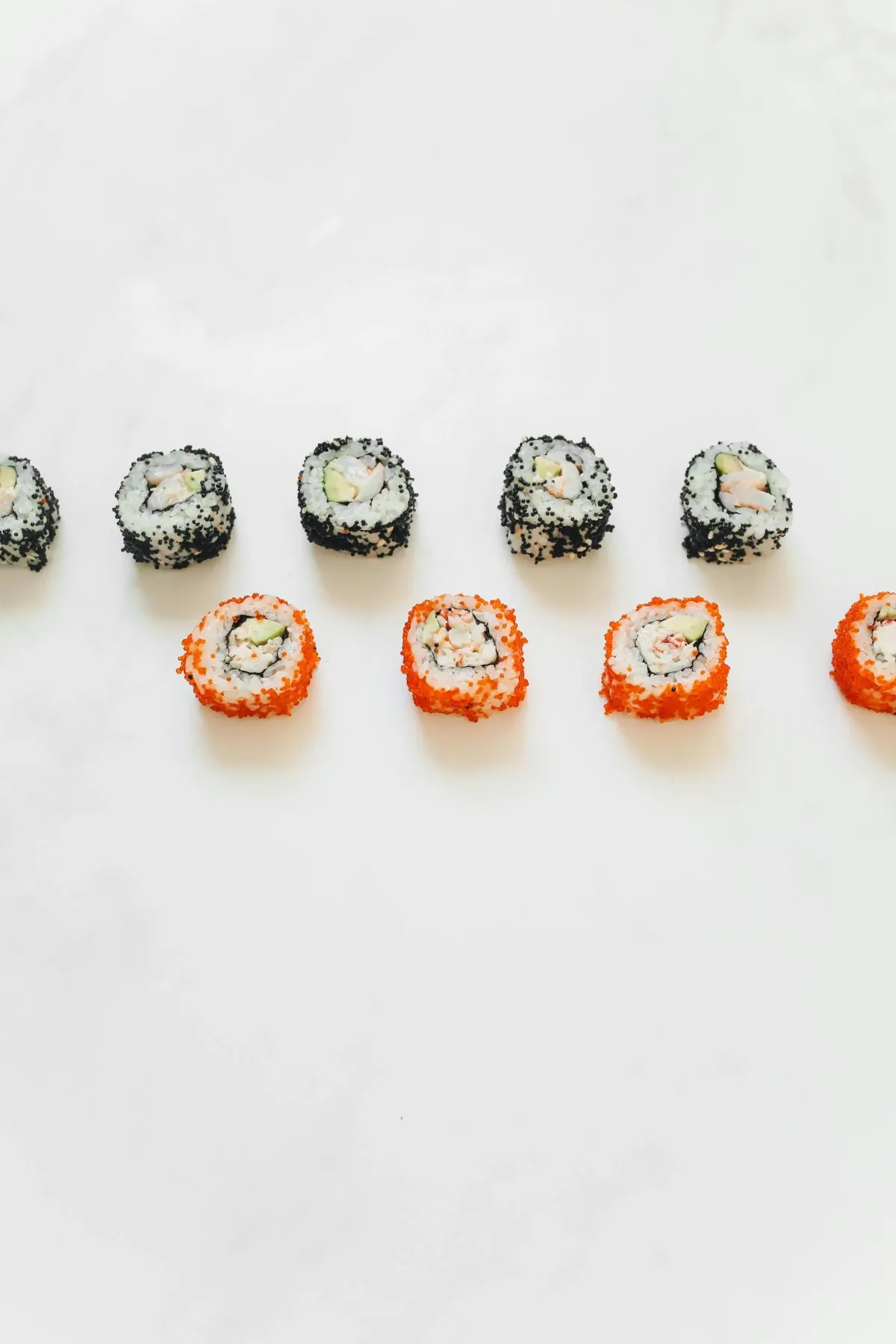
2. Nemuro Hanamaru (根室花まる) — Hokkaido fish 1 minute from Tokyo Station
If you want kaiten-zushi with noticeably higher-grade fish, Nemuro Hanamaru is the answer. This Hokkaido-born chain operates out of the KITTE building directly across from Tokyo Station's Marunouchi South Exit, and the quality reflects its roots in Nemuro — a fishing town at the eastern tip of Hokkaido known for some of Japan's finest seafood.
What to order
The ikura (salmon roe) is exceptional — large, glistening beads that pop with a clean, briny sweetness. The uni (sea urchin) gunkan is outstanding when available, sourced from Hokkaido. Try sanma (Pacific saury) when in season (autumn) or engawa (flounder fin) for its buttery, delicate texture.
Practical info
- Location: KITTE Marunouchi 5F — 2-7-2 Marunouchi, Chiyoda-ku (1 min from Tokyo Station Marunouchi South Exit)
- Hours: 11:00–22:00 daily (last order 21:30)
- Price: ¥170–600+ per plate; expect ¥2,000–4,000 per person
- Reservation: No reservations — waitlist only
- English menu: Yes, with photos
- 🌐 Official site (KITTE Marunouchi)
- 📍 View on Google Maps
Insider tip
Waits stretch past 90 min on weekends and holidays. Arrive at 11:00 opening or target a late lunch after 14:30. While you wait, head to KITTE's rooftop garden for the best free view of Tokyo Station's red-brick Marunouchi facade.
On a weekday around 5 PM I waited about 30 minutes — but the numbered-ticket system means you can wander while you wait.
The wait can be quite long, but I appreciate that we can wait elsewhere thanks to the numbered tickets.
3. Genki Sushi × Uobei Ueno — ¥110 plates on express lanes near Ueno Station
The original Genki Sushi Shibuya closed in 2020, but the brand returned to central Tokyo in October 2025 with GENKI SUSHI × Uobei — a hybrid Genki/Uobei flagship inside Ueno Gate, three minutes from JR Ueno Station.
Like its predecessor, it ditches the traditional belt entirely in favor of bullet-train-style express lanes that deliver your order directly to your seat moments after you tap the touchscreen. Kid-friendly, photogenic, and reliably fresh because every plate is made to order.
What to order
The aburi (torched) salmon with mayo is a crowd favorite. The shrimp tempura roll offers satisfying crunch. Pricing is straightforward, and because everything is made fresh on demand, quality stays consistent throughout your meal.
Practical info
- Location: Ueno Gate 3F — 6-13-14 Ueno, Taito-ku (3 min from JR Ueno Station)
- Hours: Mon–Fri 11:00–23:00 / Sat–Sun & holidays 10:30–23:00 (last order 22:45)
- Price: ¥110–360 per plate; expect ¥1,000–2,000 per person
- Reservation: Walk-in; turnover is fast
- English menu: Full touchscreen support
- 🌐 Official site (Genki Sushi)
- 📍 View on Google Maps
Insider tip
Pair with a morning at Ueno Park (Tokyo National Museum, Ueno Zoo) or an Ameyoko market walk. Handy for Ueno Park and Ameyoko; two stops from Akihabara via Okachimachi.
4. Kura Sushi (くら寿司) — ¥145 plates, capsule-toy prizes, English touchscreen
Kura Sushi takes the kaiten-zushi concept and adds a layer of gamification that's especially fun for families. Every five plates you stack into the return slot triggers a capsule-toy (gacha) game on the screen at your table. Win, and a small toy drops out.
It sounds gimmicky, but the sushi is solid — Kura Sushi uses no artificial additives, preservatives, or chemical seasonings in its rice and fish prep. The Asakusa ROX branch is a Kura Sushi "global flagship" store, designed for international visitors with multilingual touchscreens and tourist-friendly pricing.
What to order
- Bikkura pon plates — seasonal limited editions, sometimes anime collaborations
- Crab miso (kani miso) gunkan — rich and briny
- Thick-cut salmon — reliable basic
- Parfaits and cheesecake — the dessert lineup is unusually strong
Practical info
- Featured branch: Kura Sushi Asakusa ROX (Global Flagship) — Asakusa ROX 4F, 1-25-15 Asakusa, Taito-ku (5 min from Asakusa Station, Tsukuba Express side)
- Hours: Mon–Fri 11:00–23:00 / Sat–Sun 10:20–23:00
- Price: From ¥145 per plate (the flagship menu differs slightly from standard branches); expect ¥1,000–2,200 per person
- Reservation: Kura Sushi app (English-friendly) — highly recommended on weekends
- English menu: Full touchscreen support
- 🌐 Official site (Asakusa ROX)
- 📍 View on Google Maps
Insider tip
The Asakusa branch is perfect after a Senso-ji Temple morning. Combine a temple visit with a budget-friendly sushi lunch — a very Tokyo day for under ¥2,000.
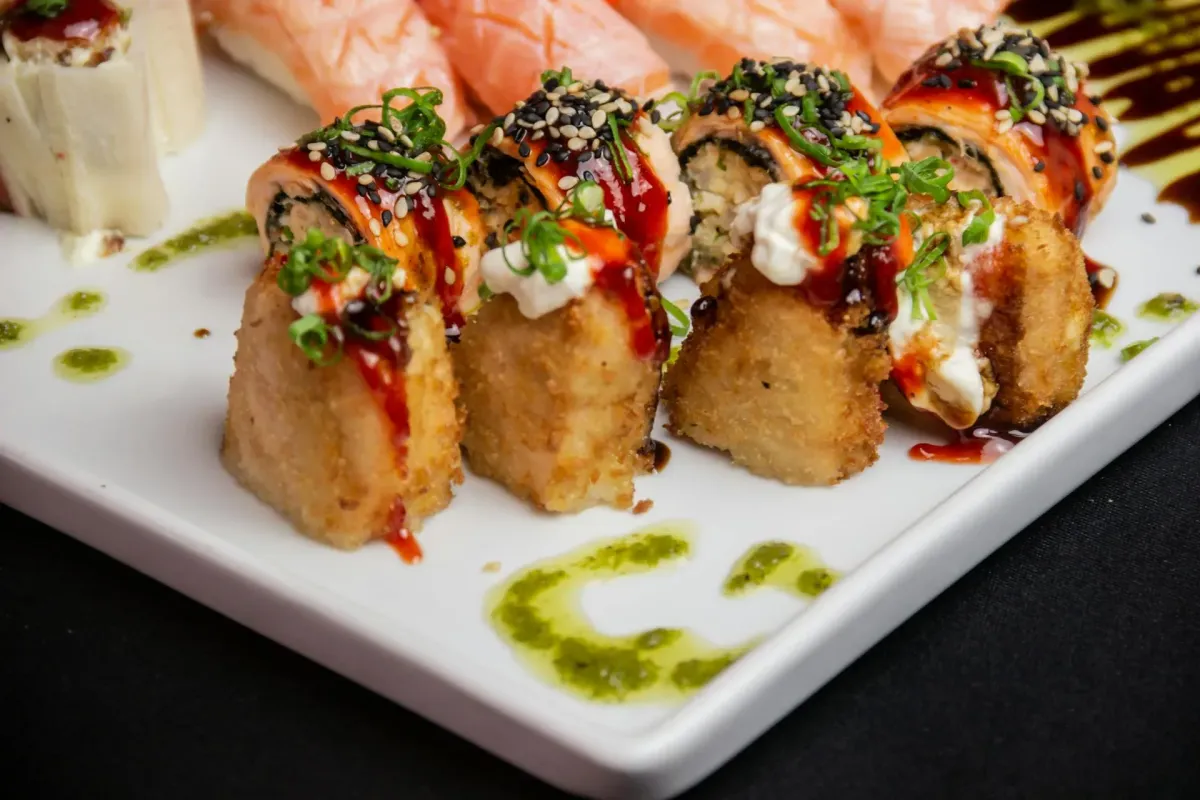
The flagship store of Muten Kura Zushi on the 4th floor of Asakusa ROX. Visited twice in December — atmosphere and cost performance both excellent.
Stopped in while wandering Asakusa. Top marks across food, service, atmosphere, value, and drinks.
5. Midori Sushi (美登利寿司) — Not a belt: sit-down sushi in Shibuya Mark City
Midori is not conveyor-belt sushi: it is a sit-down counter and table restaurant, included here because it is often searched for alongside kaiten sushi.
Midori Sushi has a long queue most days for generous portion sizes and high-quality fish at reasonable prices. The Shibuya branch — inside Shibuya Mark City East 4F (directly connected to Shibuya Station) — is the most convenient for visitors.
What to order
The official sets (¥1,980–3,630: regular nigiri ¥1,980, special ¥2,860, premium ¥3,630) are the best entry point. Cuts are visibly larger than at chain spots — the tuna pieces drape well over the rice. The original anago (a whole conger eel draped over the rice, ¥880) is another signature.
Practical info
- Location: Shibuya Mark City East 4F — 1-12-3 Dogenzaka, Shibuya-ku (directly connected to Shibuya Station)
- Hours: 11:00–21:00 daily (last order 20:30), no afternoon break
- Price: Official sets ¥1,980–3,630 (regular nigiri ¥1,980, special ¥2,860, premium ¥3,630); expect ¥4,000–6,000 per person (Tabelog reviewers)
- Reservation: Queue ticket (machine from 10:00, or weekday LINE ticket) or a TableCheck pre-ordered set
- English menu: Not confirmed; booking page in English
- 🌐 Official site (Shibuya branch)
- 📍 View on Google Maps
Insider tip
The ticket machine at the entrance starts issuing numbers at 10:00, an hour before opening, and on weekdays you can also get a LINE ticket. Free changes to a TableCheck pre-order end 3 days before. Full details in our Sushi no Midori Shibuya guide.
I come here almost every month. Cost performance is excellent and the sushi is consistently delicious — that's why I keep coming back.
I usually skip this place because of the lines, but maybe thanks to the rain, the wait was short. Worth visiting when timing is right.
6. Heiroku Sushi (平禄寿司) — ¥140 plates on a classic belt, point and grab
If your goal is simply to eat decent sushi in Tokyo for as little money as possible, Heiroku Sushi delivers. This no-frills chain keeps things simple: a genuine conveyor belt (no tablet ordering at most locations), plates from ¥140, and a straightforward atmosphere.
In central Tokyo, the most accessible Heiroku is the Omotesando branch — five minutes from Meiji-jingumae Station, and a tidy contrast to the area's high-end shopping.
What to order
Stick to the basics — sake (salmon), maguro (tuna), and ebi (shrimp) are all reliable at the lowest tier. The tamago (sweet egg omelet) is a good palate cleanser. Reviewers also call out the engawa and chutoro as surprisingly good.
Practical info
- Featured branch: Heiroku Sushi Tokyo Shibuya Omotesando — Jevily Plaza Bldg 1F, 5-8-5 Jingumae, Shibuya-ku (5 min from Meiji-jingumae Station)
- Other Tokyo branches: Tokyo Shinjuku Okubo (Hyakunincho 2-20-2)
- Hours: 11:00–21:00
- Price: ¥140–350 per plate; expect ¥2,000–3,500 per person (Tabelog reviewers report ¥2,000–3,999)
- Reservation: Not needed
- English menu: Limited — the belt is visual, point and grab
- 🌐 Official site
- 📍 View on Google Maps
Insider tip
The Omotesando branch is a sneaky pre- or post-shopping pit stop. Eat a few plates of cheap sushi before tackling Omotesando Hills, Cat Street, or Harajuku — full stomach, light wallet.
7. Uobei (魚べい) — ¥110 plates, triple express lanes, 3 minutes from Hachiko Exit
Uobei takes the express-lane concept to another level with three high-speed delivery lanes stacked at each booth. Order on the touchscreen, and within moments your plates arrive on a small tray that zooms down the lane. There's no traditional belt — every piece is made to order, which means consistently high quality.
The Shibuya Dogenzaka location is one of the most popular with international visitors, thanks to its location and the sheer novelty of the triple-lane system.
What to order
The engawa (flounder fin) and ikura are both excellent for the price. The aburi cheese salmon — torched salmon with melted cheese — is an Instagram favorite. For non-sushi options, the french fries and miso soup are solid sides.
Practical info
- Location: Dai-roku Central Bldg 1F, 2-29-11 Dogenzaka, Shibuya-ku (3 min from Shibuya Station Hachiko Exit)
- Hours: Mon–Fri 11:00–23:00 / Sat–Sun 10:30–23:00 (last order 22:30)
- Price: ¥110–360 per plate; expect ¥1,000–2,500 per person
- Reservation: Walk-in only
- English menu: Full touchscreen support
- 🌐 Official site
- 📍 View on Google Maps
Insider tip
Gets extremely busy at lunch and dinner peaks. Visit between 15:00–17:00 for minimal wait. The triple-lane delivery is genuinely entertaining to watch — have your phone ready for video.
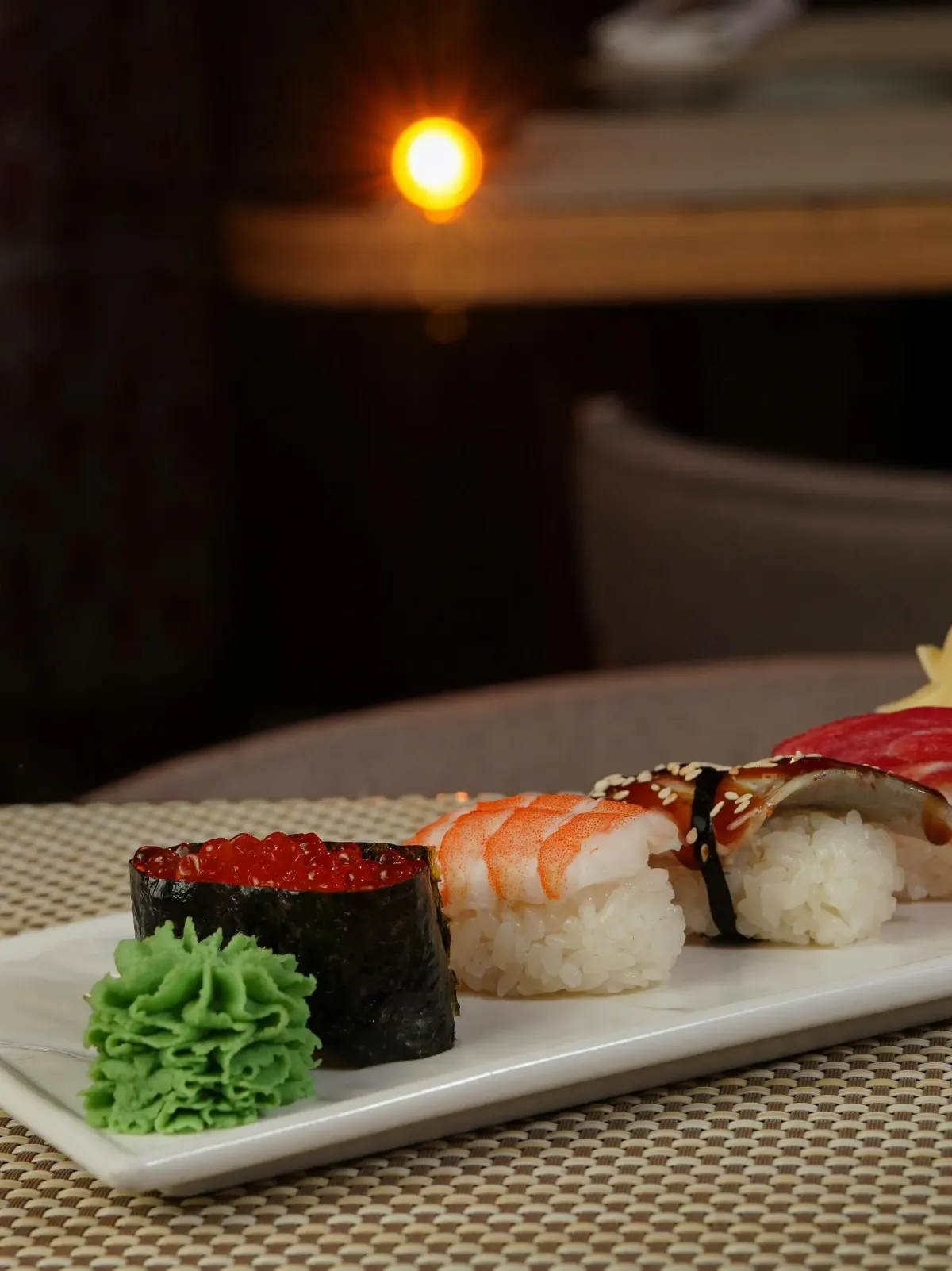
8. Kaiten Sushi Misaki — Port-fresh fish from ¥119 in Shinjuku, open until 22:00
Kaiten Sushi Misaki (海鮮三崎港 / now branded 回転寿司みさき) is run by Kyotaru, a Tokyo sushi company that sources directly from Misaki fishing port in Kanagawa.
Translation: fresher fish, better cuts, market-aligned prices. Plates start at ¥119 and rarely top ¥500. This is where to go in Shinjuku when you want quality without paying for a sit-down sushi counter.
What to order
The today's recommended (hon-jitsu no osusume) rotates daily and is always the freshest pick. The maguro trio with chutoro is a reliable order. Watch for seasonal fair plates rotated quarterly.
Practical info
- Location: Shinjuku East Side Square B1F — 6-27-30 Shinjuku, Shinjuku-ku (4 min from Higashi-Shinjuku Station Exit A3)
- Hours: 11:00–22:00 (last order 30 min before close)
- Price: ¥119–500 per plate; expect ¥1,200–2,500 per person
- Reservation: Not needed on weekdays
- English menu: Picture menu and tablet ordering
- 🌐 Tabelog page
- 📍 View on Google Maps
Insider tip
Slightly off the main Shinjuku grid (closer to Higashi-Shinjuku/Shinjuku-sanchome) — that's exactly why it's quieter than the station-front chains.
Conveyor belt sushi by Tokyo neighborhood
Staying in a specific part of Tokyo? We've written dedicated guides for the four neighborhoods where most visitors look for kaiten-zushi. Each one digs deeper into local picks, walking directions from the station, and timing tips you won't find on this main guide.
Shinjuku — budget chains and market-fresh picks
Shinjuku is the easiest area for late-night sushi runs and ultra-budget meals. Heiroku Sushi serves plates from ¥140 (Okubo branch), while Kaiten Sushi Misaki brings genuinely market-fresh fish at chain prices. Most spots are within five minutes of an exit at Shinjuku Station.
→ Read our full guide: 6 best conveyor belt sushi in Shinjuku
Shibuya — high-tech experiences and premium counters
Shibuya is where you go for the most photogenic kaiten-zushi experiences — Uobei's triple-lane system is walking distance from the famous scramble crossing, and Midori Sushi at Mark City (sit-down, not a belt) is the premium pick if you don't mind the queue.
→ Read our full guide: Shibuya's top conveyor belt sushi spots
Akihabara — value picks for an Electric Town break
Akihabara's kaiten-zushi scene is smaller but punches above its weight. Sushiro has a station-front branch that is perfect for a budget lunch between anime shopping and arcade visits, and Kura Sushi's nearest branch is one stop away in Okachimachi. Wait times are usually shorter than in Shibuya or Shinjuku.
→ Read our full guide: Conveyor belt sushi in Akihabara
Ueno — chain flagships near Ameyoko
Ueno pairs kaiten-zushi with the street-market energy of Ameyoko. The big chains all run branches within a short walk of Ueno or Okachimachi stations, which makes it an easy sushi stop before or after a museum day.
→ Read our full guide: Conveyor belt sushi in Ueno
🌆 Beyond Tokyo — Osaka
Heading west? Osaka's kaiten-zushi scene is older, cheaper, and has its own character. The format itself was invented there in 1958 at Ganso Mawaru Genroku Zushi, a chain that still runs today.
→ Read our full guide: Best conveyor belt sushi in Osaka
Kaiten-zushi, sushi train, revolving sushi: different names, same belt
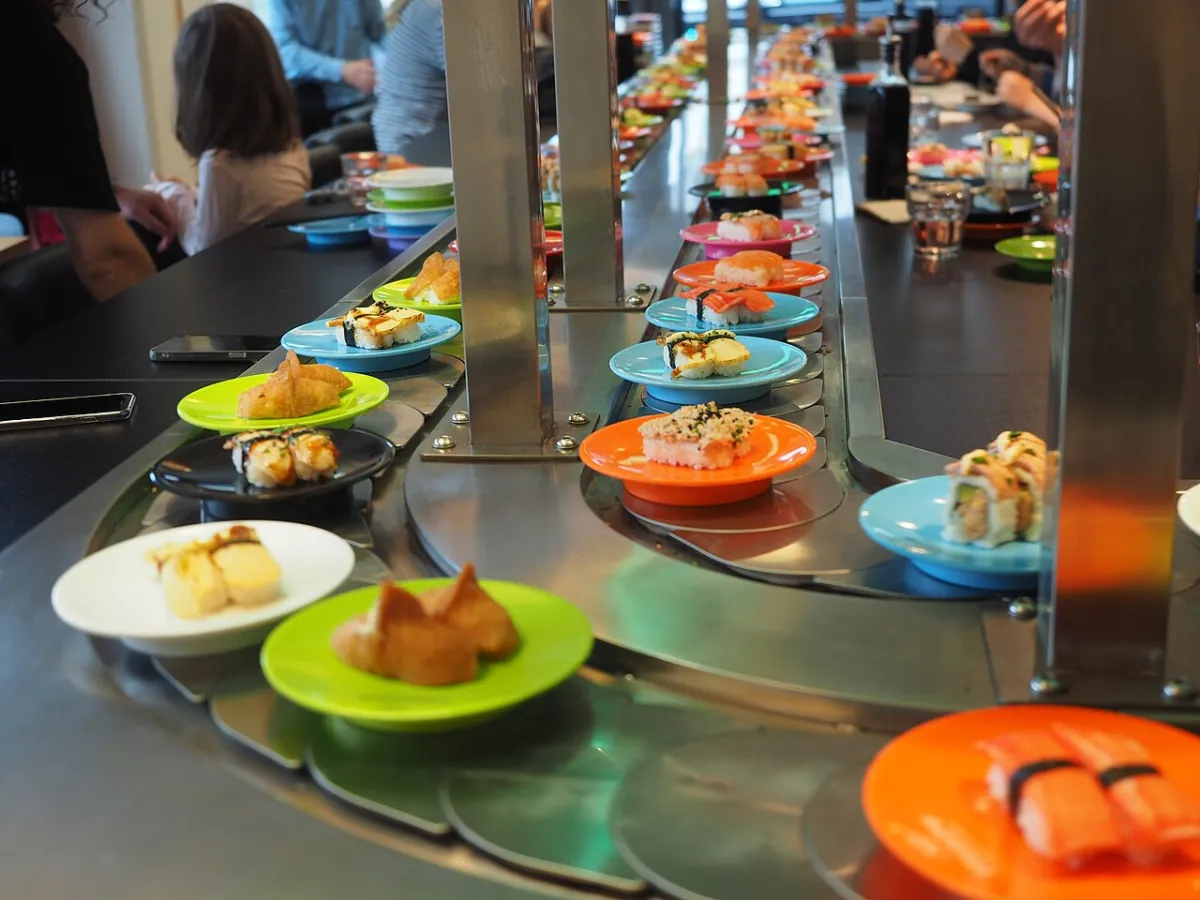
Visitors search for this style of restaurant under half a dozen names. Kaiten-zushi (回転寿司) is the Japanese term, literally "rotation sushi." Australians tend to say sushi train, Americans say conveyor belt or revolving sushi, and you will also see "running sushi" in parts of Europe. They all mean the same thing: plates circulating past your seat, priced by plate color, with touchscreen ordering at most modern chains.
One useful distinction does exist. The classic belt, where plates roam until someone grabs them, is slowly giving way to express-lane systems where everything is made to order and sent straight to your table. Uobei and Genki Sushi run pure express lanes, while Sushiro and Kura Sushi still run a hybrid of belt and express. If the theater of the rotating belt matters to you, check which system a branch uses before you queue.
Comparing brands rather than neighborhoods? Our ranked guide to the best sushi chains in Japan puts Sushiro, Kura Sushi, Hama Sushi, and Uobei head to head.
How to choose the right conveyor belt sushi spot
With eight solid options on this list, here is how to narrow it down based on what matters most to you:
By budget
- Under ¥1,500: Sushiro, Kura Sushi
- ¥1,500–3,000: Heiroku Sushi, Genki × Uobei Ueno, Uobei, Kaiten Sushi Misaki
- ¥2,500–4,000+: Nemuro Hanamaru
- ¥4,000–6,000: Midori Sushi
By experience
- Fun and high-tech: Uobei (triple lanes), Genki × Uobei Ueno (express delivery), Kura Sushi (gacha game)
- Traditional belt atmosphere: Sushiro, Heiroku Sushi
- Quality-first: Nemuro Hanamaru, Midori Sushi, Kaiten Sushi Misaki
By location
- Shibuya: Midori Sushi (Mark City), Uobei, Sushiro Ekimae
- Shinjuku: Kaiten Sushi Misaki (see also our Shinjuku guide)
- Tokyo Station / Marunouchi: Nemuro Hanamaru
- Asakusa: Kura Sushi (Asakusa ROX flagship)
- Ueno: Genki Sushi × Uobei
- Omotesando / Harajuku: Heiroku Sushi
For first-time visitors to Japan: start with Sushiro (pure value) or Kura Sushi (entertaining gacha). Both have full English touchscreens. If you want a step up in quality and don't mind a wait, make the trip to Nemuro Hanamaru at KITTE.
For a broader look at sushi options in Tokyo — including high-end counters, standing sushi bars, and market-fresh spots — see our guide to the best sushi in Tokyo.
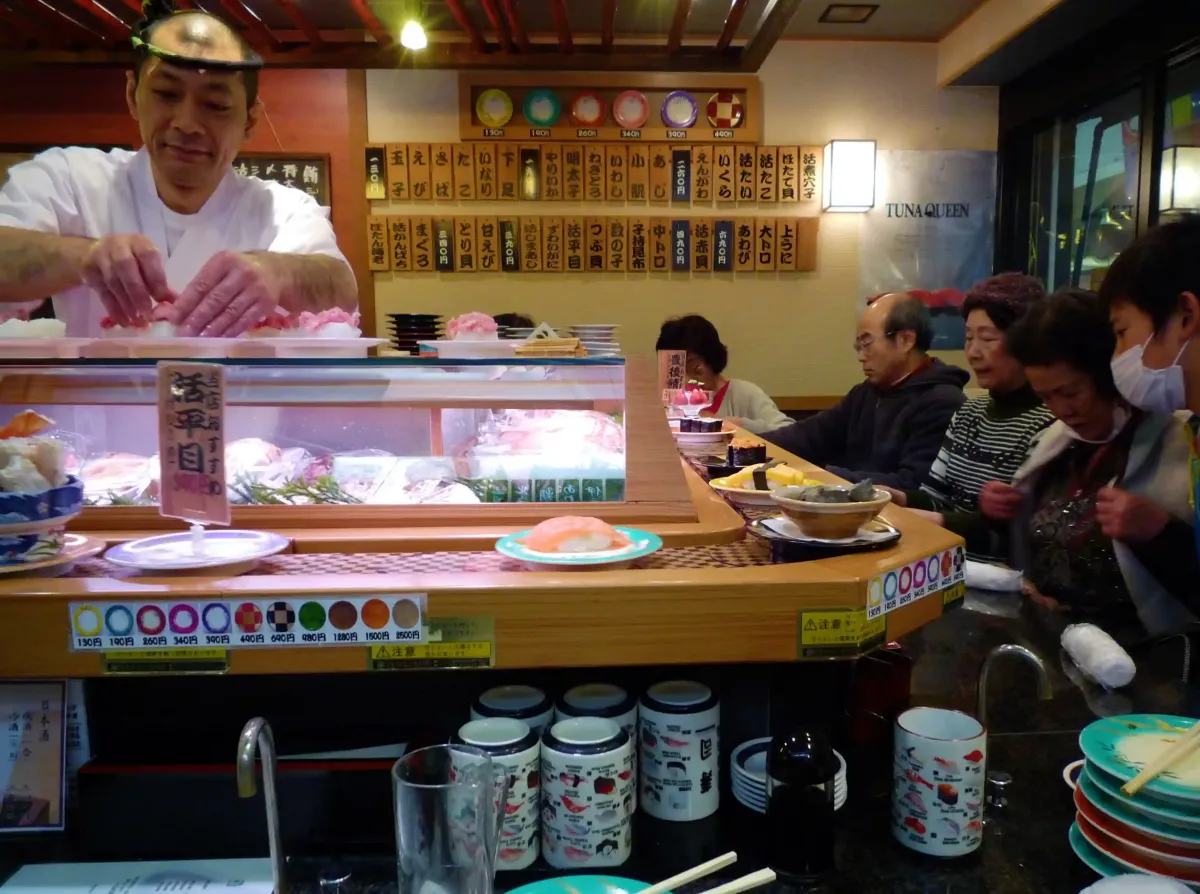
Conveyor belt sushi tips for first-time visitors
Kaiten-zushi is one of the most approachable dining experiences in Tokyo. A few tips will help you get the most out of it.
How ordering works
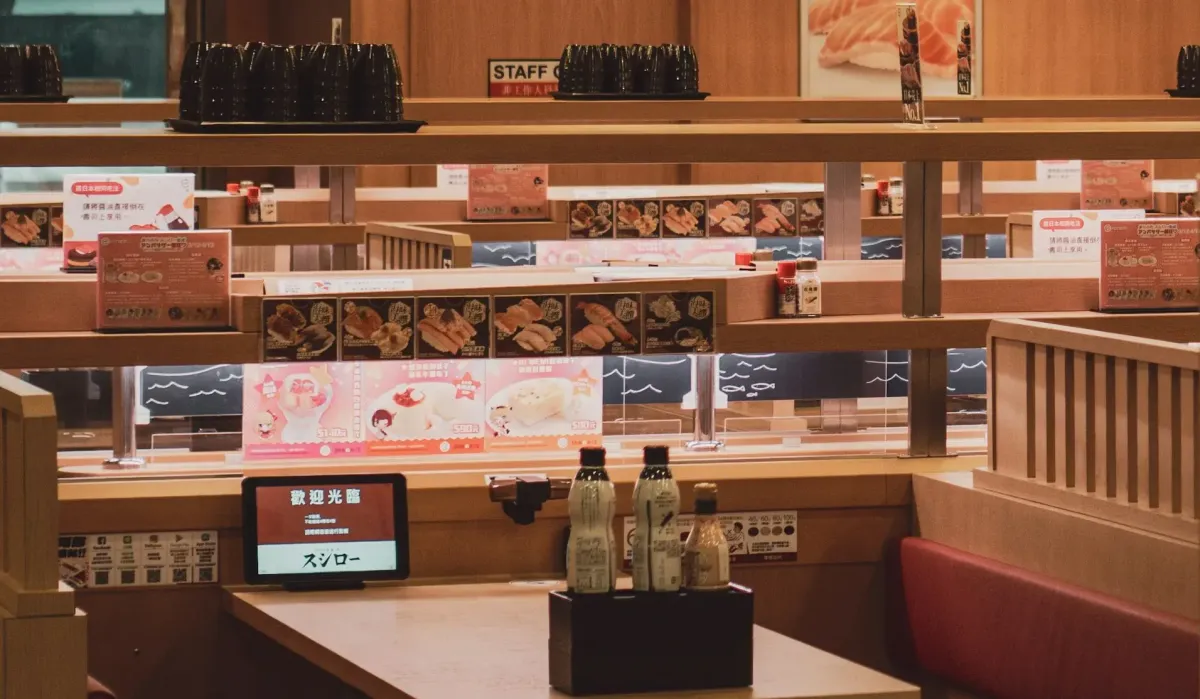
Most modern kaiten-zushi restaurants use touchscreen tablets at each seat — browse, tap, and the plate arrives via belt or high-speed lane. Older shops have a traditional belt with pre-made plates circling — just grab whatever catches your eye.
How pricing works
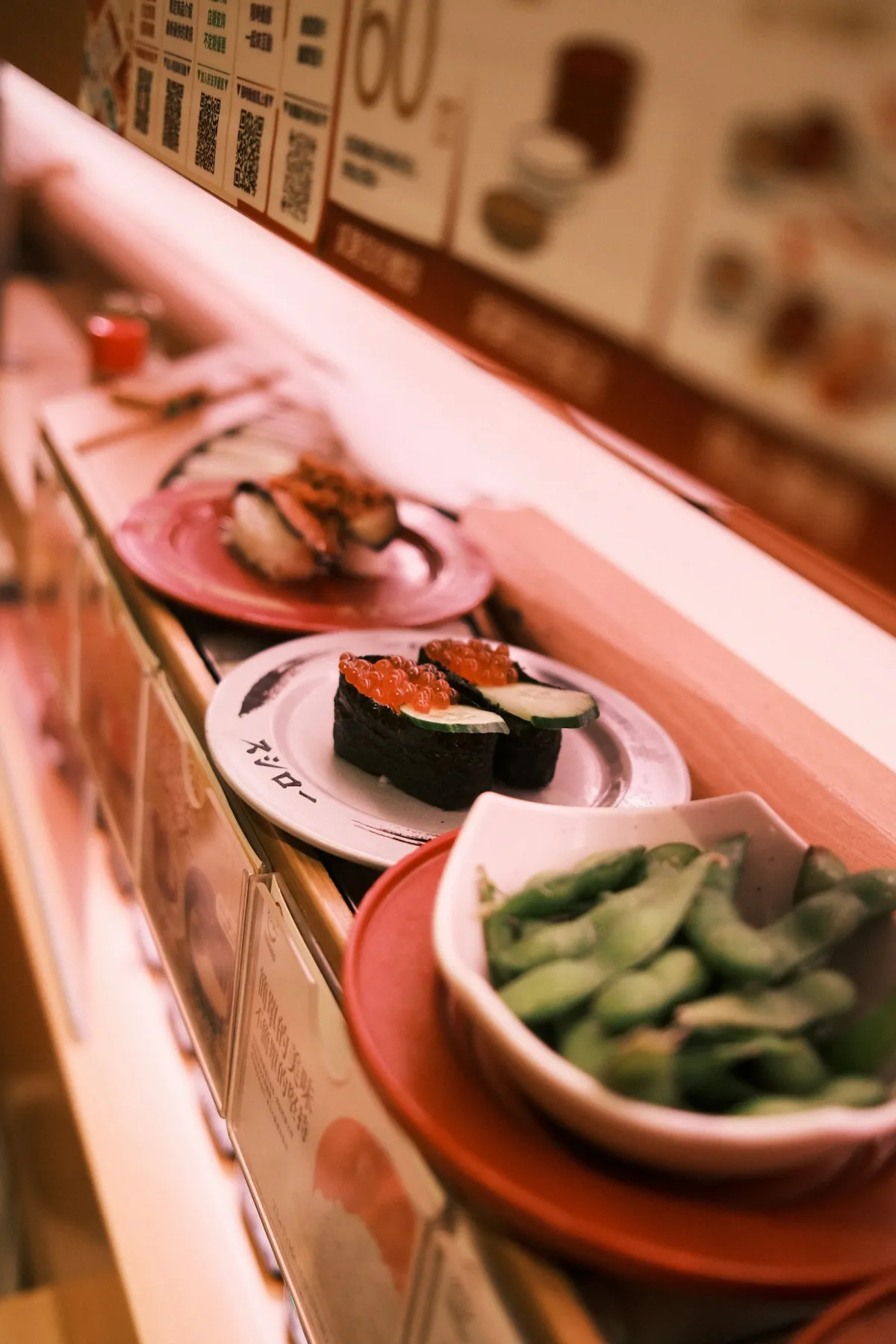
Plates are color-coded by price. At the big chains the cheapest plates (salmon, tuna, shrimp) start around ¥145–150; Misaki and Uobei go lower. Premium items like uni, ikura, or otoro might be ¥300–600. Your bill is calculated by counting plates or scanning your tablet's order history.
Etiquette basics
- Once you pick a plate off the belt, it is yours — do not put it back
- Stack your finished plates neatly at your table
- Soy sauce goes on the fish, not the rice (dip fish-side down)
- Pickled ginger (gari) is a palate cleanser between fish, not a topping
- Green tea powder and hot water are self-serve at your seat — free and unlimited
For a deeper dive, our complete sushi etiquette guide for tourists covers everything you need to know.
Peak hours to avoid
- ✅ 14:00–17:00 (weekdays) or after 21:00
- ❌ 12:00–13:30 (lunch rush)
- ❌ 18:00–20:00 (dinner rush)
Useful Japanese phrases
- Oaiso (お会計) — "Check, please"
- Osusume wa? (おすすめは?) — "What do you recommend?"
- Wasabi nashi (わさび抜き) — "No wasabi, please"
FAQ
- How much does conveyor belt sushi cost in Tokyo?
- At the big chains the cheapest plates start around ¥145–150 (about $1 USD); Misaki and Uobei go lower. Most people spend ¥1,000–3,000 ($7–20) for a satisfying meal. Higher-quality spots run more: Nemuro Hanamaru ¥2,500–4,000 per person, Midori Sushi ¥4,000–6,000 per person.
- Do conveyor belt sushi restaurants in Tokyo have English menus?
- Yes. Sushiro, Kura Sushi, Genki Sushi, Uobei and Kaiten Sushi Misaki all offer English touchscreen ordering. Smaller independent spots may have more limited English support, but the visual nature of the conveyor belt makes ordering intuitive regardless.
- Is conveyor belt sushi in Tokyo good quality?
- Yes. Even the budget chains use fresh fish, and the quality is well above what most visitors expect. For the highest quality, try Nemuro Hanamaru or Midori Sushi.
- Do I need a reservation for conveyor belt sushi in Tokyo?
- Most restaurants accept walk-ins, but popular spots can have waits of 30–90 minutes during peak hours. Sushiro and Kura Sushi both offer reservation apps (English-friendly) that let you join the waitlist remotely. Nemuro Hanamaru does not take reservations, so arrive early or off-peak. Midori Sushi Shibuya issues queue tickets from 10:00 (weekday LINE tickets too) or takes pre-ordered set bookings on TableCheck.
- What's the difference between kaiten-zushi and regular sushi restaurants?
- Kaiten-zushi (conveyor belt sushi) is a casual, self-service format where pre-made sushi travels on a belt or is ordered via touchscreen. Regular sushi restaurants (sushi-ya) typically feature a chef preparing pieces to order at a counter. Kaiten-zushi is faster, cheaper, and more relaxed.
- Can I eat conveyor belt sushi with kids?
- Kaiten-zushi is one of the most kid-friendly dining options in Tokyo. The moving belt and touchscreen ordering are entertaining, portions are small and manageable, and there are always non-sushi options like tamagoyaki, edamame, french fries, and desserts. Kura Sushi is especially popular with families thanks to its capsule-toy game.
- Are there vegetarian options at conveyor belt sushi in Tokyo?
- Yes, most major chains carry tamago, inari, kappa-maki, avocado rolls, natto rolls, edamame, corn gunkan, and french fries. Sushiro and Kura Sushi both label allergen and animal-product information on their English touchscreens. For dedicated meat-free dining, see our vegetarian ramen Tokyo guide.
- Are conveyor belt sushi restaurants halal?
- No Tokyo kaiten-zushi chain is halal-certified, and most use mirin (a sake-based seasoning) along with non-halal proteins. If you need certified halal options, see our halal food Tokyo guide or halal ramen in Tokyo instead.
Plan your Tokyo sushi adventure
Tokyo's conveyor belt sushi scene is one of the best ways to experience incredible Japanese seafood without the price tag or formality of a traditional sushi counter. Whether you're grabbing a solo lunch between sightseeing stops or sitting down for a fun family dinner, the restaurants on this list deliver fresh, delicious sushi at prices that are hard to believe.
For a complete overview of all types of sushi dining in Tokyo — from ¥110 conveyor belts to omakase counters where the chef serves each piece by hand — explore our full guide to the best sushi in Tokyo.