The best sushi in Shinjuku for first-time visitors — omakase counters, standing sushi bars from ¥130 a piece, late-night Sushi Zanmai until 5 AM, and exit-by-exit walking directions from Shinjuku Station's East, West, South and Shin-Okubo sides.
Introduction
Shinjuku is one of the most convenient bases in Tokyo to eat sushi at any budget — from ¥130-a-piece standing counters where salarymen queue between trains, to 10-seat omakase rooms tucked into Nishi-Shinjuku side streets, to a 24-hour Sushi Zanmai branch that stays open until 5 AM.
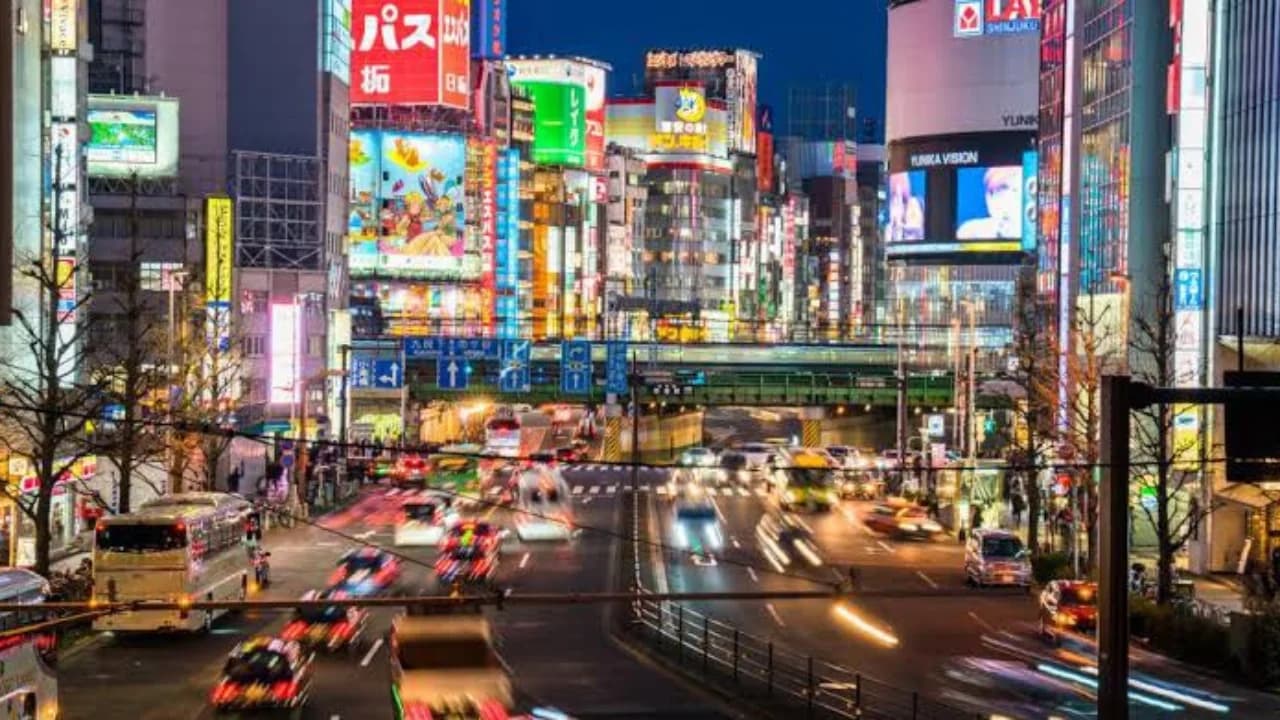
This guide is built for first-time visitors who searched "sushi in Shinjuku" and now have to make sense of the world's busiest train station. Shinjuku Station has more than 200 exits across JR, Odakyu, Keio, and three subway lines — so every shop below is grouped by its nearest exit (East / West / South / Shin-Okubo) with walking times.
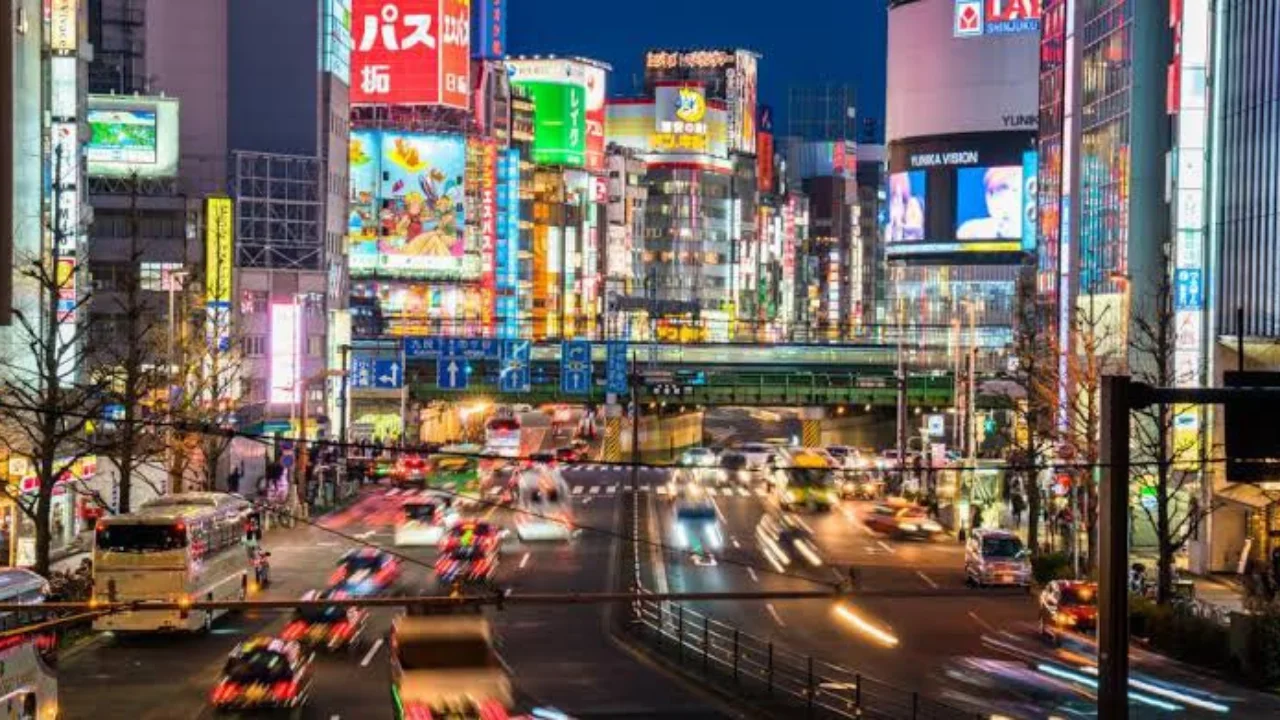
Looking for something more specific? We have dedicated guides for Shinjuku's 6 best conveyor belt sushi spots (kaiten-zushi from ¥800), the best tsukemen in Shinjuku, vegan ramen in Shinjuku, and the best gyoza in Shinjuku.
Quick picks (by category and Shinjuku exit)
Tap a name to jump to the full section.
| Category | Shop | Closest exit | Price | Best for |
|---|---|---|---|---|
| Omakase | Sushi Iwa (Nishi-Shinjuku) | West Exit | ¥10,000–¥25,000 | First serious omakase in Tokyo |
| Omakase | Sushi Inase Shinjuku | East Exit / Sanchome | ¥20,000+ | New 10-seat counter, opened May 2026 |
| Mid-range | Tsukiji Tama Sushi (Takashimaya) | South / New South | ¥3,000–¥6,000 | English-friendly nigiri set lunch |
| Standing | Uogashi Nihon-Ichi (Nishi-guchi) | West Exit | ¥130–¥500 / piece | Classic stand-up sushi, salaryman crowd |
| Late-night | Sushi Zanmai Higashi-Shinjuku | Shin-Okubo / East | ¥2,000–¥4,000 | Open until 5 AM daily |
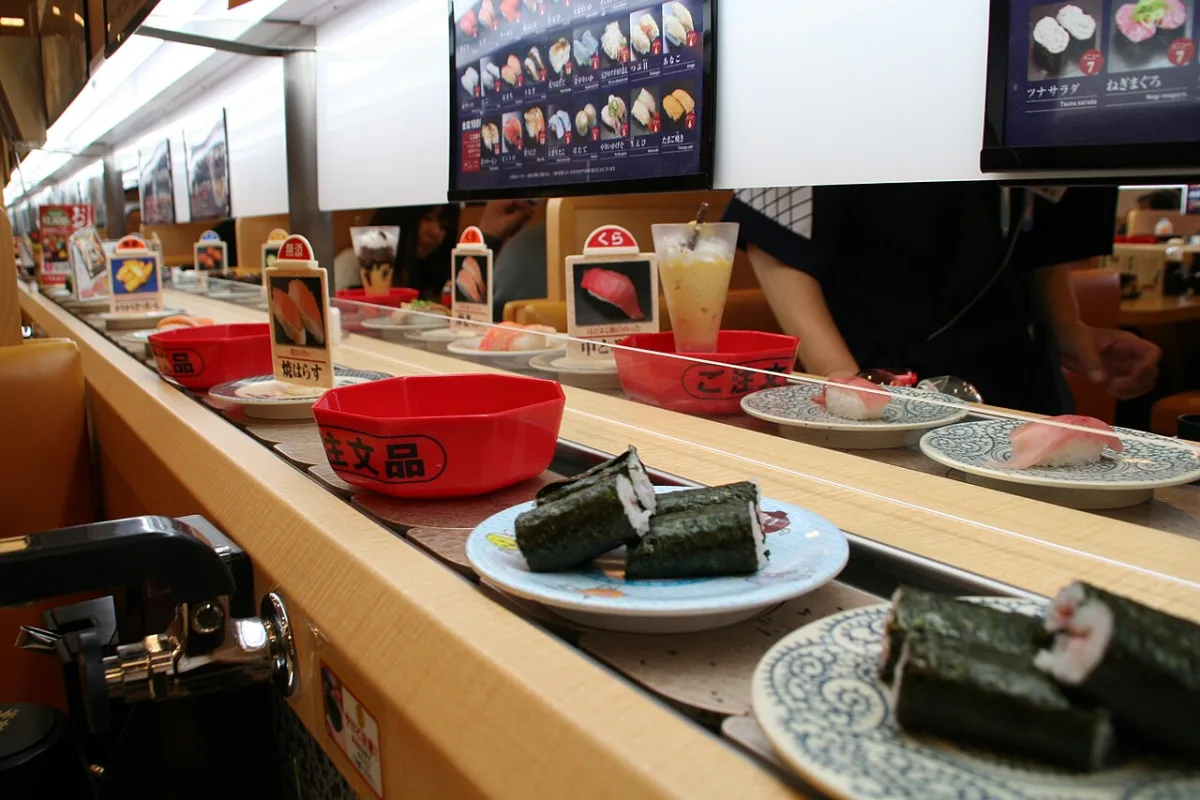
| Conveyor | Numazuko Shinjuku Honten | East / Sanchome | ¥150–¥500 / plate | 100+ market-fresh varieties |
| Conveyor | Kaiten Sushi Misaki | East Side Square | ¥119–¥500 / plate | Misaki-port fish, quiet location |
1. Sushi Iwa (Nishi-Shinjuku) — Omakase
Chef Iwase opened this nine-seat counter in Nishi-Shinjuku in 2012 after training at the Tsukiji Sushi Iwa group. The shop has earned a place on Tabelog's Top 100 Sushi in Tokyo list and is widely recommended as a first "serious" omakase for visitors stepping up from kaiten-zushi.
What to order
The omakase course alternates nigiri with small composed plates — petite tai (sea bream), salt-grilled anago (sea eel), steamed shellfish from Kyushu — paired with a sake list of ten or more selections, including the chef's personal Fukushima picks. The cadence is what makes Iwa a good introduction: it never feels like a marathon of rice and fish.
Practical info
- Address: Fukuchi Bldg. 1F, 3-4-1 Nishi-Shinjuku, Shinjuku-ku, Tokyo
- Nearest station: Shinjuku Station West Exit (西口), ~5-minute walk
- Hours: Lunch 12:00–14:00 (last entry 13:00). Dinner 16:00–24:00 (last entry 21:30). Closed Wednesdays and public holidays.
- Budget: Lunch from approximately ¥10,000; dinner ¥15,000–¥25,000+ per person
- Reservations: Strongly recommended — book through Pocket Concierge or by phone
- English menu: Limited; chef and staff handle key dishes in English
- 📍 View on Google Maps
Insider tip
Lunch is the easiest entry — same chef, same ingredients, roughly half the dinner spend. Dress smart-casual. The Nishi-Shinjuku side streets behind the skyscraper district feel quiet at lunch but get lively in the evening with after-work crowds heading to Omoide Yokocho a few minutes away.
2. Sushi Inase Shinjuku — Omakase counter
Sushi Inase is a small omakase group with sister branches in Shibuya and Akasaka. The new Shinjuku branch opened in May 2026, hidden in a basement on a side street between Shinjuku 3-chome and Shinjuku Station — close enough to walk from either, far enough below ground that you immediately leave the city's noise behind.
Only 10 counter seats. A single chef. The pacing is intimate rather than theatrical, which makes it a fair alternative when Sushi Iwa is fully booked.
What to order
Omakase only. Expect a course of seasonal nigiri interleaved with small dishes — a typical Tokyo Edomae structure. The sake and shochu list is small but considered.
Practical info
- Address: New Shinjuku Bldg. B1F, 3-34-15 Shinjuku, Shinjuku-ku, Tokyo 160-0022
- Nearest station: Shinjuku-Sanchome Station (新宿三丁目駅), ~3 min; or Shinjuku Station East/New South Exit, ~6–8 min
- Hours: Sunday & Saturday & public holidays 12:00–14:30 and 17:30–23:00. Tuesday–Friday dinner only 17:30–23:00. Closed Mondays.
- Budget: ¥20,000+ for dinner omakase; lunch course typically lower
- Reservations: Required — use byFood, OMAKASE, or direct phone booking
- English menu: Limited; reservations and seating handled in English
- 📍 View on Google Maps
Insider tip
Because the shop opened only in May 2026, reservations are still relatively obtainable a week or two out — a rare window before any new high-end sushi counter in central Tokyo fills up months ahead.
3. Tsukiji Tama Sushi (Shinjuku Takashimaya)
Tsukiji Tama Sushi is a 90-year-old Tokyo sushi group that originated in the old Tsukiji market and now operates branches across the city. The Shinjuku Takashimaya branch — inside the Takashimaya Times Square department store directly south of the JR station — is the easiest mid-range sushi experience for visitors who don't want to commit to omakase pricing but want fish a clear notch above kaiten.
The room is bright, the menu is photo-illustrated, and English is handled comfortably.
What to order
Set courses (nigiri-zen) at lunch are the value pick: a curated selection of seven to ten pieces with miso soup and tamago for ¥3,000–¥4,500. The à la carte menu lists each piece by name in English. The chutoro, anago, and ikura gunkan are reliable orders.
Practical info
- Address: Shinjuku Takashimaya 14F (Restaurants Park), 5-24-2 Sendagaya, Shibuya-ku, Tokyo (the Takashimaya building is on the Shibuya-ku side of the South Exit complex)
- Nearest station: JR Shinjuku Station New South Exit (新南口) / Shinjuku South Exit (南口), ~3 min; Shinjuku-Sanchome Station, ~5 min
- Hours: Approximately 11:00–22:00 (Takashimaya Restaurants Park standard; last order ~21:00)
- Budget: ¥3,000–¥6,000 per person for set courses; à la carte higher
- Reservations: Walk-in friendly; reservations possible for groups
- English menu: Yes, with photos
- 🌐 Tsukiji Tama Sushi (group site)
- 📍 View on Google Maps
Insider tip
The restaurant floors at Takashimaya stop seating around 21:00. If you are coming in for an early dinner after a Shinjuku Gyoen walk (a 5-minute stroll east), aim for 17:30 to avoid the post-shopping rush at 19:00.
4. Uogashi Nihon-Ichi — The classic standing sushi bar
Standing sushi bars (tachigui-zushi) are a Tokyo tradition: you stand at a counter, order pair by pair, eat in ten to twenty minutes, pay, and move on. Uogashi Nihon-Ichi is the genre's most accessible entry point in Shinjuku, with the Shinjuku Nishi-guchi (西口) branch sitting four minutes from Shinjuku Station's West Exit on the way toward Omoide Yokocho.
The room is small, loud, and fast. Salarymen come for a 15-minute dinner before the train home. Tourists are welcome — there is an English menu — but the etiquette is to order, eat, and not linger.
What to order
Nigiri is sold by the kan (piece) or by pair. Prices typically run ¥130–¥500 per piece, with most standards (maguro, salmon, ebi, tamago, ika) at the lower end and items like uni, ikura, and chutoro at the upper. A satisfying meal with a small beer runs around ¥2,000 per person — competitive with chain kaiten but with hand-formed nigiri made in front of you.
Practical info
- Address: 1-12 Nishi-Shinjuku, Shinjuku-ku, Tokyo (Shinjuku Nishi-guchi branch)
- Nearest station: JR Shinjuku Station West Exit (西口), ~3–4 min walk
- Hours: Approximately 11:00–23:00 daily (varies; check Google Maps)
- Budget: ¥1,500–¥3,000 per person
- Reservations: Not accepted — standing only, first come first served
- English menu: Yes
- Tabelog page: Sushi Uogashi Nihon-Ichi Shinjuku Nishi-guchi
- 📍 View on Google Maps
Insider tip
Go at 16:30–17:30 — too early for the salaryman wave, too late for the lunch crowd. You will get the best chef attention and the freshest cuts of the afternoon.
5. Sushi Zanmai Higashi-Shinjuku — Open until 5 AM
Sushi Zanmai is a national chain with one quality that makes its Shinjuku branch indispensable to tired travelers: the Higashi-Shinjuku location is open daily from 11:00 until 5:00 the following morning. Long lunches, late dinners, post-Golden-Gai snacks, jet-lag breakfast at 4 AM — all covered.
This is not the place for an omakase pilgrimage. It is the place when you land at Haneda at 22:00, drop your bags in a Shinjuku hotel, and want hand-formed nigiri instead of a convenience-store meal.
What to order
The set platters (moriawase) are a fast way to sample a range — eight or nine pieces of standard nigiri for ¥2,000–¥3,000. Tuna is the chain's brand calling card; their president famously bid on the New Year first-tuna auction at Toyosu for years. The chutoro and negitoro maki are reliable.
Practical info
- Address: 1-1-15 Okubo, Shinjuku-ku, Tokyo (Higashi-Shinjuku branch)
- Nearest stations: Higashi-Shinjuku Station (東新宿駅), ~3 min; Shin-Okubo Station, ~7 min; JR Shinjuku Station East Exit, ~12 min
- Hours: 11:00–05:00 daily
- Budget: ¥2,000–¥4,000 per person
- Reservations: Walk-in only
- English menu: Yes, with photos
- Payment: Credit cards, IC (Suica/Pasmo), QR (Rakuten Edy, iD, QUICPay), and cash all accepted
- 📍 View on Google Maps
Insider tip
There is also a smaller Sushi Zanmai Shinjuku Higashiguchi (East Exit) branch at 3-18-4 Shinjuku — closer to the JR station but with shorter hours. For 24-hour-style availability, the Higashi-Shinjuku branch is the one.
6. Numazuko — 100+ varieties near Sanchome
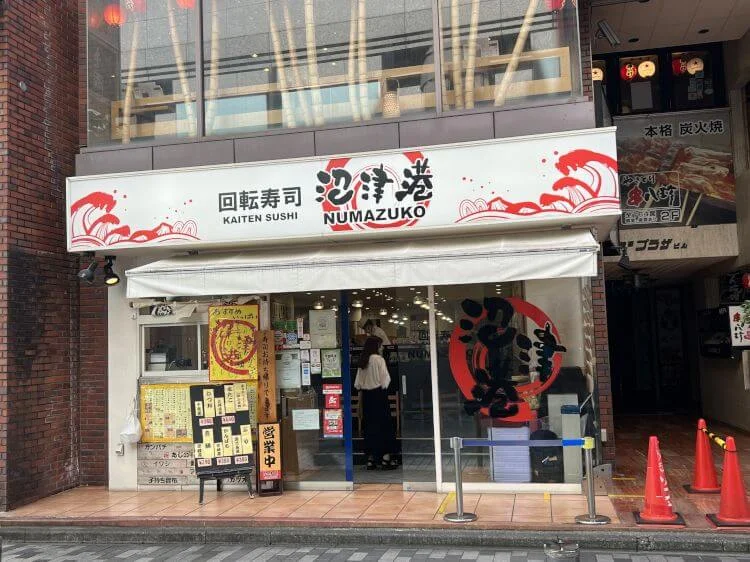
Numazuko (沼津港 新宿本店) is a hybrid: technically a kaiten-zushi shop, but most plates are now made to order rather than circling on a belt, and the menu reads more like a sit-down sushi-ya than a chain. They source through Tokyo's fish markets and keep over 100 varieties on the menu — unusual depth for the price.
This is the Shinjuku spot for visitors who want variety without paying omakase prices, with English-comfortable ordering and walk-in seating.
What to order
Anything labeled honjitsu no osusume (today's recommended). The tuna selections are the chain's strength — multiple cuts at fair prices. Side dishes (karaage, aji-furai) are reliable.
Practical info
- Address: Ikeda Plaza Bldg. 1F, 3-34-16 Shinjuku, Shinjuku-ku, Tokyo
- Nearest stations: Shinjuku-Sanchome Station Exit E9 (~30 sec); JR Shinjuku Station East Exit, ~2 min
- Hours: 11:00–22:30 daily
- Budget: ¥2,000–¥3,000 per person
- Reservations: Walk-in only; expect waits at peak hours
- English menu: Limited
- 🌐 Tabelog page
- 📍 View on Google Maps
Insider tip
14:30–17:00 is the calmest window. Pair with a walk through nearby Isetan Shinjuku or onward to Shinjuku Gyoen for an easy half-day.
7. Kaiten Sushi Misaki — Quiet East-side pick
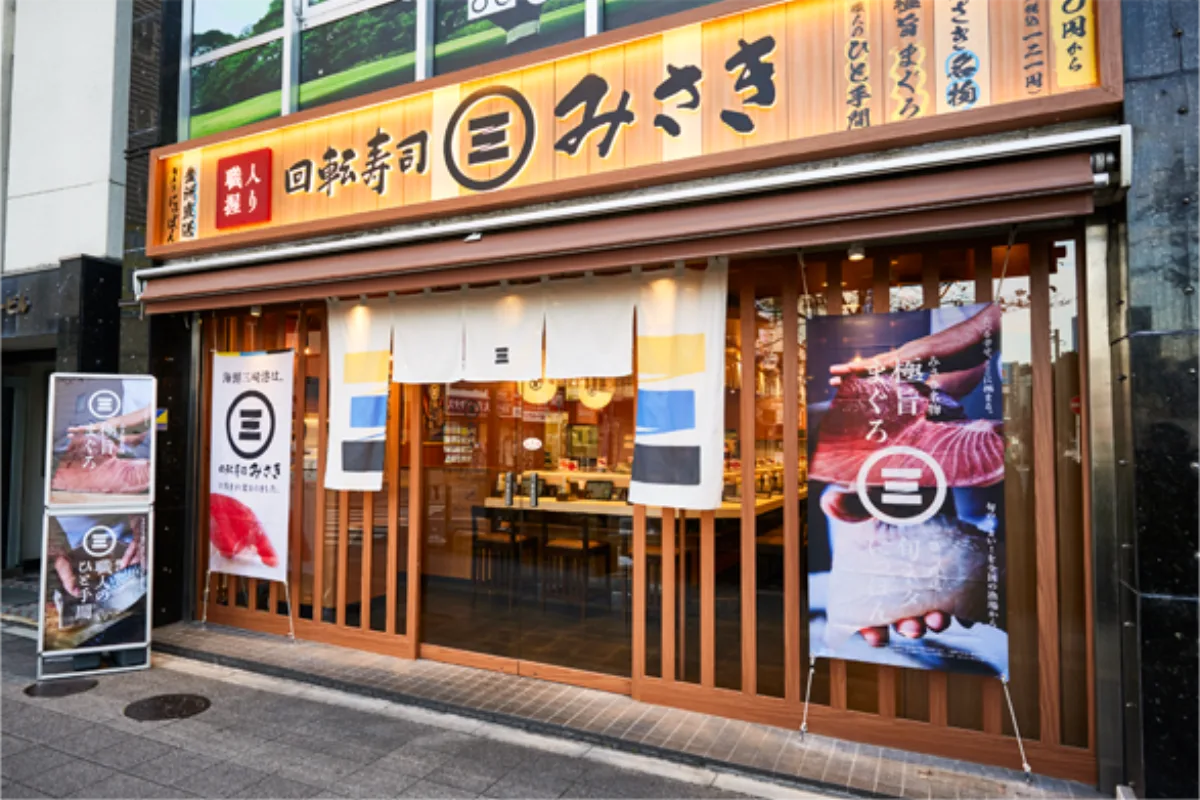
If you specifically want conveyor belt sushi but also want fish that is a step above the cheapest chains, Kaiten Sushi Misaki — operated by Kyotaru and sourced from Misaki fishing port in Kanagawa — is the Shinjuku answer. The branch sits inside Shinjuku East Side Square, closer to Higashi-Shinjuku than the main JR station, which is exactly why it is consistently quieter than the station-front kaiten chains.
What to order
Today's recommended (hon-jitsu no osusume) and the maguro trio with chutoro. Plates start at ¥119 and rarely top ¥500.
Practical info
- Address: Shinjuku East Side Square B1F, 6-27-30 Shinjuku, Shinjuku-ku
- Nearest station: Higashi-Shinjuku Station Exit A3 (~4 min); JR Shinjuku Station East Exit, ~10–12 min
- Hours: 11:00–22:00 (last order 30 min before close)
- Budget: ¥1,200–¥2,500 per person
- English menu: Picture menu and tablet ordering
- 🌐 Official site (Kyotaru)
- 📍 View on Google Maps
Insider tip
For more conveyor belt sushi options across all of Shinjuku — including budget chains like Heiroku, Kura Sushi, Sushiro, and the local Himawari Zushi — see our dedicated Shinjuku conveyor belt sushi guide.
Standing sushi bars in Shinjuku — a quick primer
If you have heard the phrase "standing sushi bar" (tachigui-zushi, 立ち食い寿司) and wondered what it actually means, Shinjuku is one of the best places in Tokyo to try it.
What it is. A small counter — usually six to twelve standing positions — where the chef forms nigiri to order in front of you. No seats. No reservations. Most meals last 10–20 minutes.
Why it exists. Without seats, real estate cost per customer collapses. That savings is passed to the diner: hand-formed nigiri at roughly half the price of a sit-down sushi-ya, with quality often closer to a mid-tier shop than to chain kaiten.
How it works in practice.
- Walk in, find an open spot at the counter, and the chef will acknowledge you.
- Order pair by pair — "two pieces of maguro, please" rather than a long list.
- Eat each piece within a few seconds of receiving it. Standing sushi is meant to be eaten warm.
- Drinks (beer, sake, green tea) are ordered separately, usually from the counter staff.
- When you are full, ask for the bill (okaikei kudasai, お会計ください) and pay at the counter.
Etiquette.
- Do not linger after finishing — others are waiting for the spot.
- Phone use is fine for a quick photo, but the room is small. Keep conversations short.
- Solo diners are completely normal at standing sushi bars and often the majority.
Where to try it in Shinjuku.
- Uogashi Nihon-Ichi Nishi-guchi — the classic recommendation for first-timers. Four minutes from the West Exit.
- A handful of smaller standing bars also operate inside the underground Shinjuku-Sanchome arcade and around Omoide Yokocho — those open and close more frequently, so we have not listed specific names that we cannot verify in 2026.
For first-time visitors, Uogashi Nihon-Ichi is the safe, proven pick.
Choosing by Shinjuku exit
Shinjuku Station has more than 200 exits across JR, Odakyu, Keio, Toei Shinjuku, Toei Oedo, and Tokyo Metro Marunouchi lines. Picking sushi by which exit you walk out of will save you 20 minutes of underground navigation.
East Exit (東口) and Shinjuku-Sanchome
The most visitor-friendly side. Kabukicho, Don Quijote, Isetan, and Shinjuku Gyoen are all here.
- Numazuko Shinjuku Honten — 30 sec from Sanchome E9
- Sushi Inase Shinjuku — 3 min from Sanchome
- Sushi Zanmai Shinjuku Higashiguchi (East Exit branch) — 2 min from JR East Exit
West Exit (西口) — skyscraper district and Omoide Yokocho
Quieter at lunch, lively at night.
- Sushi Iwa — 5 min toward the Tokyo Metropolitan Government area
- Uogashi Nihon-Ichi — 3–4 min on the way to Omoide Yokocho
South Exit (南口) and New South Exit (新南口)
The Takashimaya / NEWoMan / Shinjuku Gyoen side.
- Tsukiji Tama Sushi at Shinjuku Takashimaya — 3 min from New South Exit
- (Also the gateway exit for Shinjuku tsukemen — Fuunji is 5 min south)
Shin-Okubo Station / Higashi-Shinjuku
Korea Town side, ~10 minutes north of Shinjuku Station on foot or one stop on the JR Yamanote (to Shin-Okubo) or Toei Oedo (to Higashi-Shinjuku).
- Sushi Zanmai Higashi-Shinjuku — 3 min from Higashi-Shinjuku, open until 5 AM
- Kaiten Sushi Misaki — 4 min from Higashi-Shinjuku A3
Sushi etiquette for first-time visitors
These customs apply at every shop in this guide, from ¥130 standing bars to ¥20,000 omakase rooms.
Eating nigiri. Pick the piece up with chopsticks or with your fingers — both are fine. Dip the fish side into soy sauce, not the rice. Eat in one bite when possible.
Wasabi. It is already placed between the rice and fish at most shops. Do not stir extra wasabi into your soy sauce — that is a kaiten-zushi habit, not an omakase one. If you cannot eat wasabi, say sabi-nuki de onegai shimasu (さび抜きでお願いします).
Gari (pickled ginger). A palate cleanser between pieces, never a topping.
Order. A traditional order is light fish first (white-fleshed, like flounder), then richer (tuna), then strong-flavored (uni, anago). At omakase, the chef chooses the order for you.
Photography. A quick photo of the piece in front of you is welcome at almost every shop. Setting up lighting or recording video is not — especially at counters with seating for under 12.
Tipping. Never expected anywhere in Japan, including standing bars and omakase counters.
Halal / vegetarian needs. No mainstream sushi shop in Shinjuku is certified halal — most use mirin (sake-based) and many soy sauces contain alcohol traces. For halal-friendly Tokyo dining see our halal food in Tokyo guide. Vegetarian options at sushi shops are typically limited to tamago, kappa-maki, inari, and natto-maki.
Other Shinjuku food guides
Pair your sushi run with the rest of Shinjuku's best food categories — most are within a 10-minute walk.
- 🍜 Best tsukemen in Shinjuku — Fuunji, Gonokami, and the city's hardest reservation at Raa Menya Shima
- 🚦 6 best conveyor belt sushi in Shinjuku — Heiroku, Kura, Sushiro, and locals' picks from ¥800
- 🥬 Vegan ramen in Shinjuku — plant-based ramen specialists in Shinjuku
- 🥟 Best gyoza in Shinjuku — neighborhood gyoza picks
- 🐟 8 best conveyor belt sushi in Tokyo — wider city view including Tokyo Station and Shibuya