The Halal Wagyu Stall on Shibuya Center-gai sells wagyu skewers and wagyu-don. Menu notes, unconfirmed prices, a prayer space and directions.
Introduction
If you have searched for halal wagyu in Tokyo, the Halal Wagyu Stall in Shibuya almost certainly came up. It appears in several halal guides — not a sit-down restaurant, but a counter shop serving halal wagyu skewers and wagyu beef bowls at prices that would seem impossible for Japanese wagyu anywhere else.
This guide covers everything you need to know before you go: what is on the menu, how much it costs, what we know about its halal status, exact walking directions from Shibuya Station, and how it compares to other halal wagyu options in Tokyo.
If you are weighing a sit-down halal wagyu yakiniku dinner instead, see our full halal wagyu guide for Tokyo for six spots across the city. For broader halal dining, our Tokyo halal food guide covers ramen, sushi, and more.
Quick facts
| Item | Detail |
|---|---|
| Format | Halal counter shop (order downstairs, ~8–10 seats upstairs; no reservations) |
| Address | Kitada Building, 29-3 Udagawacho, Shibuya-ku, Tokyo 150-0042 |
| Nearest station | Shibuya Station, Hachiko Exit — 4–5 min walk on Center-gai |
| Hours | Not published (Tabelog lists none); check Google Maps before you go |
| Halal status | Described as halal; no certifying body is publicly listed, so ask staff about certification |
| Prayer facilities | Prayer space upstairs (Halal Food in Japan lists one on 2F); ask staff about wudu facilities |
| English menu | Not confirmed |
| Payment | Cash always accepted; IC / QR commonly available — confirm at the counter |
| Tabelog | tabelog.com/en/tokyo/A1303/A130301/13319103/ |
What is the Halal Wagyu Stall?
The Halal Wagyu Stall is a small halal counter shop on Shibuya Center-gai (Center Street), occupying the ground floor and upper floors of the Kitada Building. The downstairs counter is where you order; upstairs has roughly 8–10 seats plus a prayer space (ask staff about wudu facilities) — a setup that clearly considers Muslim travelers and locals.
It fills a real gap: getting halal wagyu in Tokyo is rare, and getting affordable halal wagyu is rarer still. Most halal wagyu in Tokyo is served at full-service yakiniku restaurants where a meal can run about ¥3,000 to ¥11,000 per person. Here you can taste real halal Japanese wagyu in skewer or rice-bowl form for a fraction of that.
The trade-off is the experience: it is a counter operation rather than a sit-down restaurant, the menu is intentionally tight, and the upstairs seating fills quickly at peak hours. For most travelers, that trade is well worth it — and the prayer space upstairs makes this an easy halal lunch stop in Shibuya.
Menu and prices
The menu is intentionally tight, with four wagyu mains rotating across the counter:
Wagyu skewers (kushiyaki)
Chunks of seasoned wagyu threaded onto bamboo skewers and grilled over high heat. The outside chars quickly while the inside stays pink and juicy — exactly what you want from a quick wagyu hit. Earlier notes put a skewer set with fries at around ¥2,500 (≈$17 USD), but we could not find a published price list, so confirm at the counter.
Wagyu beef bowl (wagyu-don)
Thinly sliced wagyu over rice with a sweet-savory soy-based sauce. This is the heartier option if you want a meal rather than a snack. Earlier notes put it at around ¥1,500 (≈$10 USD); unconfirmed.
Halal wagyu burger
A halal wagyu burger is reported on the counter menu (unconfirmed; ask at the counter) — handy if you want something you can eat one-handed while walking Center-gai.
Sakura ramen
A pink-tinted halal ramen variant has appeared on the menu in recent months. Unconfirmed; availability varies day-to-day, so ask at the counter.
Note on pricing
Prices and exact menu items shift between visits. The figures above are unconfirmed planning estimates; no published price list was found. The counter is small enough that asking the staff directly is the fastest way to confirm what is on offer that day.
Is the Halal Wagyu Stall really halal?
The shop presents itself as halal and is built around halal Japanese wagyu, but we could not confirm a certifying body from public sources. A few things worth knowing:
- Certification body: Neither Tabelog nor Halal Food in Japan lists a certifying organisation or certification status for the shop, and we could not verify that a certificate is displayed. If exact certification documentation matters for your trip, ask the staff for the issuing body's name before you order.
- The wagyu is described as halal Japanese beef. Halal wagyu has become more available in Japan over recent years as suppliers built dedicated slaughter and processing chains, but we could not confirm which supplier the shop uses.
- Prayer space upstairs. Halal Food in Japan lists a prayer space on the 2F; ask staff about wudu (ablution) facilities. On-site prayer space is rare at Tokyo eateries.
- Sauces and marinades are described as halal-aligned. If you have a specific concern (e.g., mirin / cooking alcohol), ask at the counter — the staff are accustomed to the question.
For the most rigorous travellers, treat the shop as Muslim-friendly until you have seen documentation.
How to find it (Shibuya directions)
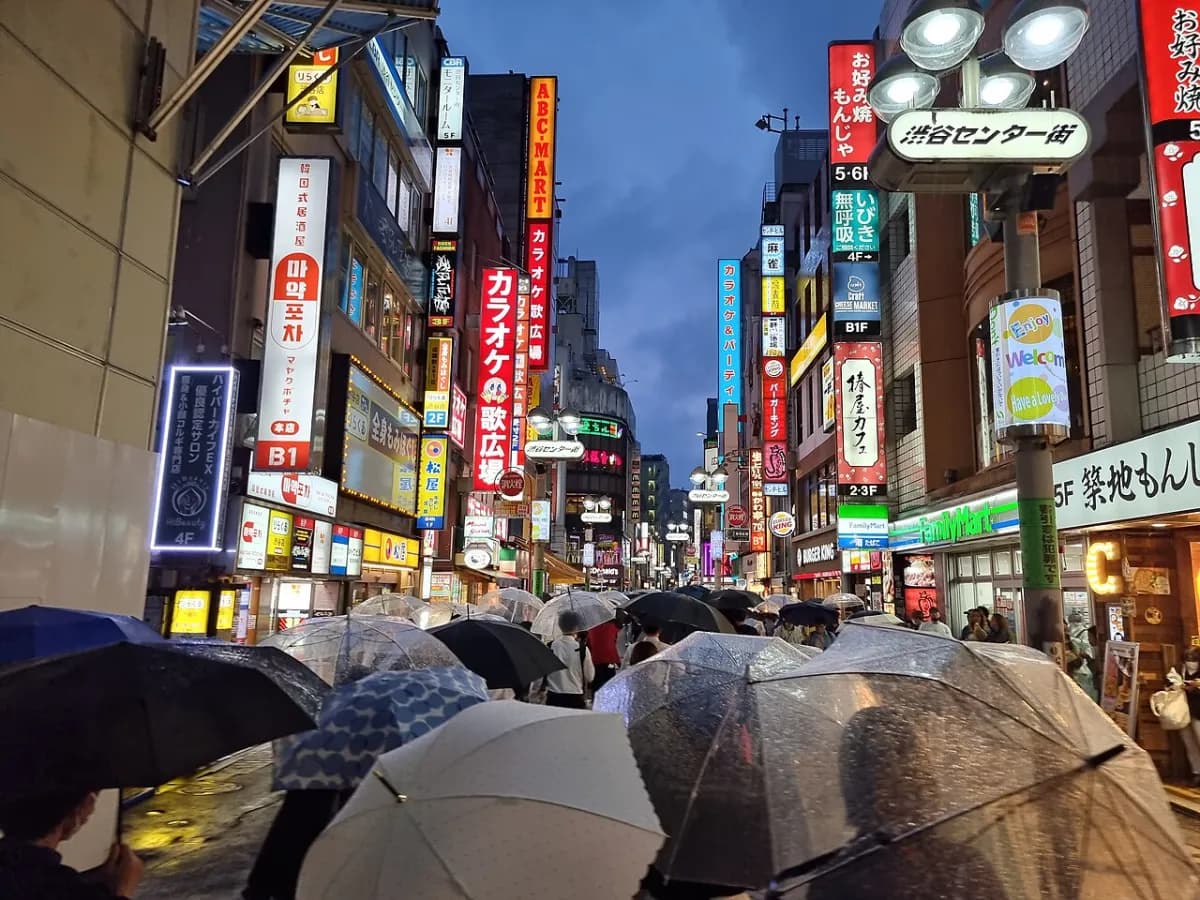
The shop is at a fixed address on Center-gai (Center Street), the main pedestrian arcade running north from Shibuya Crossing. Specifically:
- Address: Kitada Building (北田ビル), 29-3 Udagawacho, Shibuya-ku, Tokyo 150-0042 (〒150-0042 東京都渋谷区宇田川町29-3)
- From Shibuya Station: Hachiko Exit → cross Shibuya Scramble Crossing → walk north on Center-gai → Kitada Building is roughly 4–5 minutes from the station, ~1 minute from the Crossing
- Look for: an English 'HALAL WAGYU STALL' sign at street level
Walking directions, step by step
- Exit Shibuya Station via the Hachiko Exit (北口・ハチ公口)
- Cross Shibuya Scramble Crossing toward the giant pedestrian-facing video screens
- Enter Center-gai (センター街) — the wide pedestrian street directly across from the crossing
- Walk straight up Center-gai for roughly 200–250 metres
- The shop is in the Kitada Building on the right side of the street
If you get turned around, the most reliable backup is to search 'Halal Wagyu Stall' on Google Maps — the pin lands on Kitada Building. The shop has been at this fixed address since opening; reports of it being a 'roving' or 'pop-up' stall are inaccurate.
When to go
Best time: 11:00–12:00, right after opening. The wagyu is at its freshest, the queue is at its shortest, and you have time to circle back if something is sold out.
Worst time: Friday and Saturday afternoons (around 13:00–16:00). The stall sees its peak traffic during weekend Shibuya foot traffic, and lines of 15–30 minutes are common.
Sold-out risk: Small counter shops like this often work in limited daily quantities. If a popular item is sold out by mid-afternoon, that is a sign of demand rather than poor planning — try again the next morning.
How it compares to other halal wagyu in Tokyo
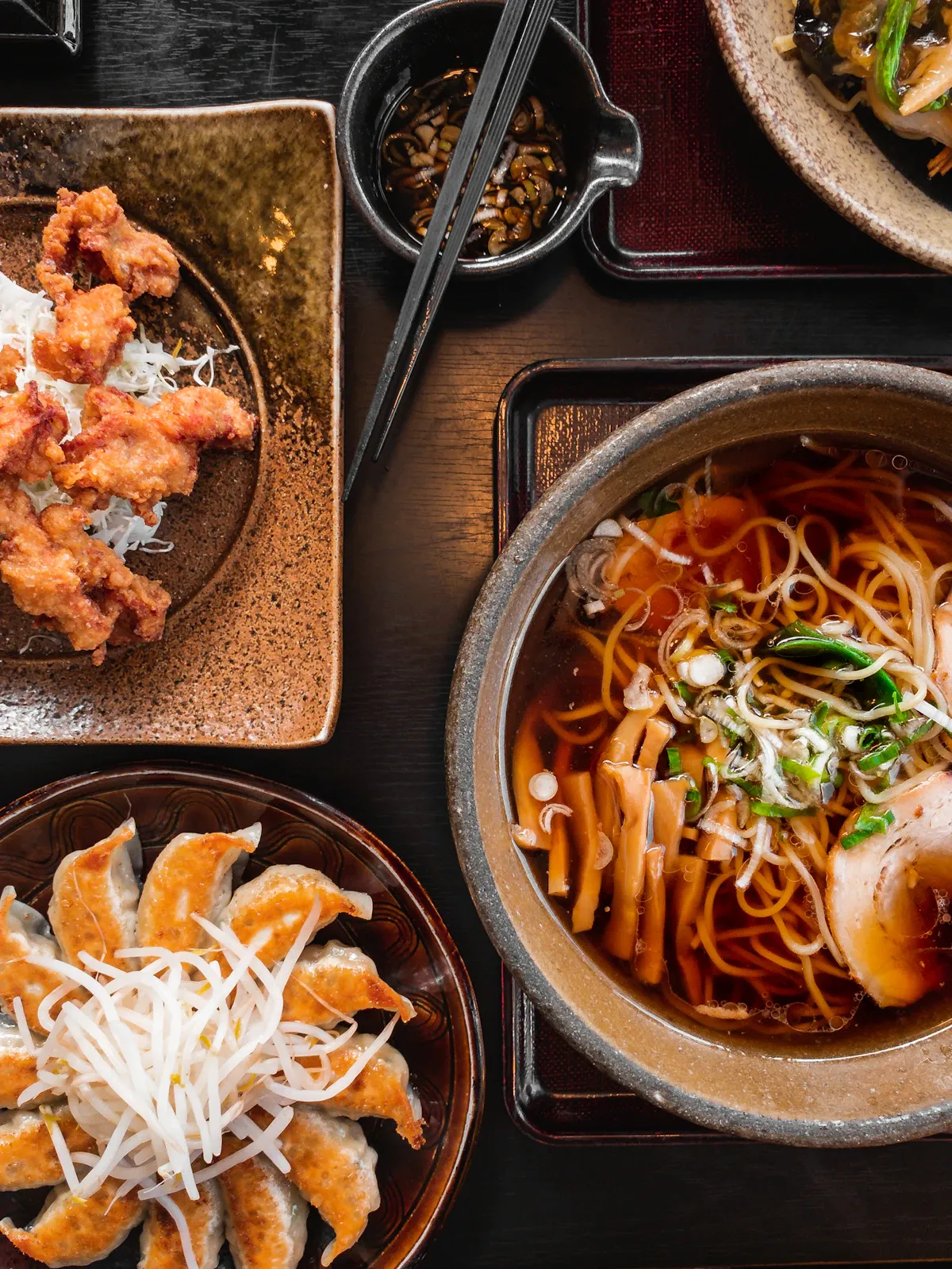
The stall is excellent for what it is, but it is not the right answer for every situation. Here is when to choose it — and when to look elsewhere.
Choose the Halal Wagyu Stall if you want
- A quick, casual halal wagyu experience between sightseeing stops
- Your first taste of wagyu without committing to a full dinner
- A budget-friendly option (prices unconfirmed, but a counter format should cost less than the ¥3,000-and-up sit-down spots)
- No reservation hassle, no language barrier, no etiquette concerns
Choose a sit-down halal wagyu restaurant if you want
- The full Japanese wagyu yakiniku experience (grilling at the table) — try Gyumon (牛門) in Shibuya, our top pick for halal yakiniku
- A halal wagyu ramen — head to Shinjuku-tei (新宿亭) in Shinjuku, Shibuya, Yotsuya, and other branches
- A dinner yakiniku in Asakusa — try Panga
- A celebration dinner with multiple courses
For full details on all of these, see our halal wagyu Tokyo guide.
Quick comparison
| Spot | Format | Budget | Reservation | Best for |
|---|---|---|---|---|
| Halal Wagyu Stall (this guide) | Counter shop | Unconfirmed | None | Quick, casual, on-the-go |
| Gyumon, Shibuya | Yakiniku | ¥3,000–¥3,999 (dinner) | Recommended | Full halal yakiniku dinner |
| Shinjuku-tei | Ramen shop | ¥1,500–¥4,500 (plus tax) | None | Halal wagyu ramen |
| Panga | Yakiniku | About ¥11,000 | Recommended | Dinner yakiniku in Asakusa |
Other things to do nearby
The Halal Wagyu Stall pairs well with a broader Shibuya itinerary. A few halal-friendly suggestions for your day:
- Shibuya Crossing and Hachiko statue — both are within the same 5-minute walk radius from the stall.
- Shibuya Sky observation deck — for skyline views, the rooftop is a 10-minute walk from the stall.
- Halal lunch or dinner — see our Tokyo halal food guide for sit-down halal options across Shibuya, Shinjuku, and Asakusa.
- Halal ramen — if you want a hot bowl after the wagyu skewers, our halal ramen guide lists halal ramen shops in Tokyo, several of which are within easy reach of Shibuya.
If you are exploring the broader area on foot, a single afternoon can comfortably cover the stall, Shibuya Crossing, the Hachiko statue, and a halal dinner spot.
Final thoughts
The Halal Wagyu Stall is one of the easiest, most accessible ways to taste authentic halal Japanese wagyu in Tokyo. You will not get the full restaurant experience, but you will get genuinely good halal wagyu at a price that lets you actually try it — instead of saving wagyu for a once-in-a-trip splurge.
For most travelers, the right move is to combine both: the stall for a casual midday wagyu hit, and a sit-down halal wagyu dinner at one of Tokyo's sit-down halal restaurants on a different day. Our halal wagyu Tokyo guide covers every option you need to plan that.