The best free things to do in Tokyo: temples, parks, observation decks, neighborhood walks, and more. No tickets needed for any of these.
Introduction
Tokyo has a reputation for being expensive, but here is a secret that seasoned travelers know: some of the best experiences in the city are completely free. Ancient temples, world-class people-watching, stunning observation decks, and entire neighborhoods that feel like open-air museums -- all without spending a single yen on admission.
We have spent years exploring Tokyo on every kind of budget, and we can confidently say that you could fill an entire week with free activities and still not run out of things to do. Whether you are saving money for a big sushi dinner or just prefer experiences that do not come with a ticket booth, this guide has you covered.
Below, we have grouped 14 of the best free things to do in Tokyo by area and theme, so you can combine several into a single day out. Grab your train pass and a pair of comfortable shoes -- that is all you need.
Asakusa: Temples, market streets, and old Tokyo charm
Asakusa is one of the best neighborhoods in Tokyo for free sightseeing, and you could easily spend half a day here without opening your wallet.
Senso-ji Temple and Nakamise-dori
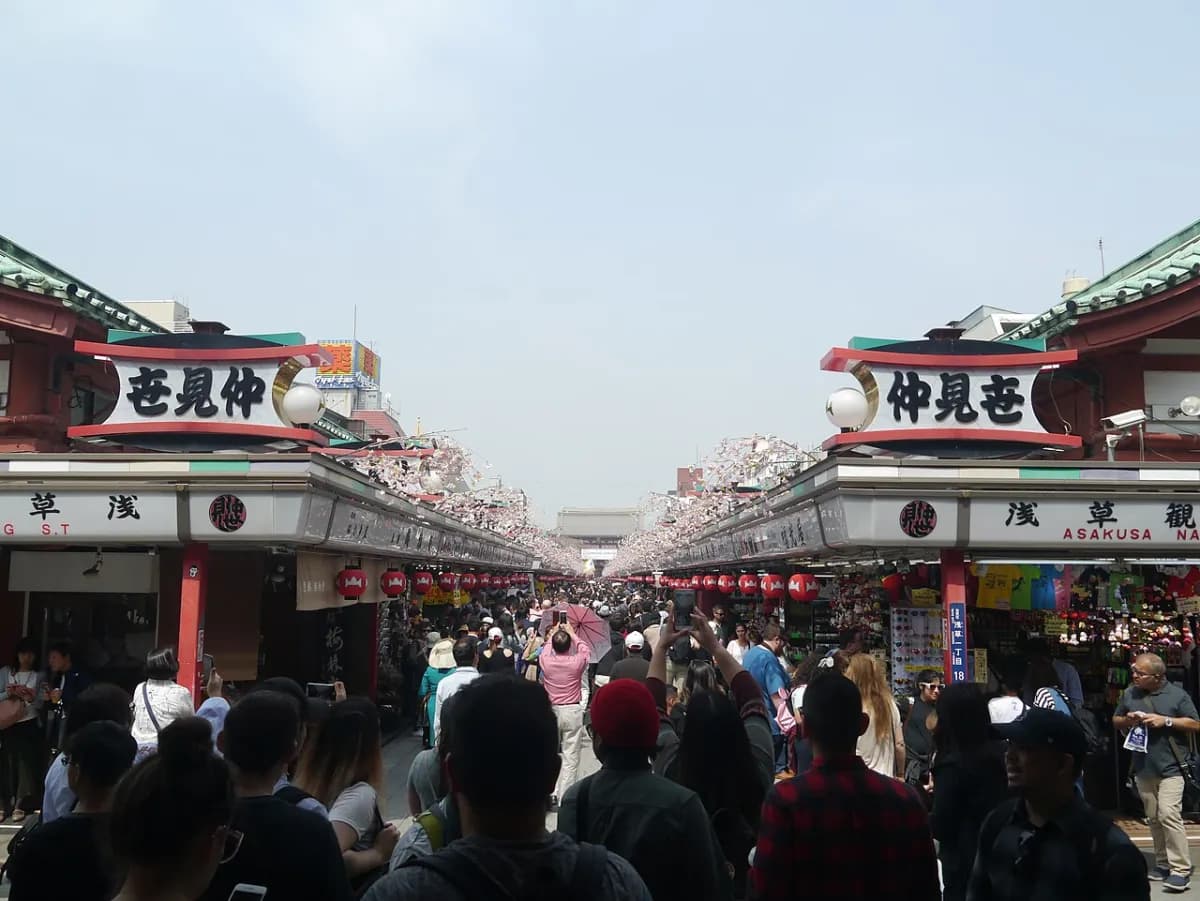
Senso-ji is Tokyo's oldest temple, dating back to 645 AD, and it is completely free to enter. Walk through the iconic Kaminarimon (Thunder Gate) with its massive red lantern, then stroll up Nakamise-dori -- the 250-meter shopping street leading to the main hall. While the street is lined with food stalls and souvenir shops, simply walking through and soaking in the atmosphere costs nothing.
The temple grounds themselves are beautiful at any time of day, but we especially love early morning visits (before 9:00) when the crowds have not yet arrived and the incense smoke drifts quietly across the courtyard. The five-story pagoda, the main hall, and the smaller shrines scattered around the complex are all free to explore.
If you do want to grab a snack while you are here, our cheap street food Asakusa guide covers the best options on Nakamise-dori and the surrounding back streets.
Tsukiji Outer Market
The famous inner wholesale market moved to Toyosu, but the Tsukiji Outer Market remains very much alive -- and free to walk around. This maze of narrow lanes is packed with seafood vendors, knife shops, tamagoyaki (Japanese omelette) stalls, and tiny restaurants.
You do not need to buy anything to enjoy Tsukiji. The energy of the market, the sight of vendors expertly slicing fish, and the sheer variety of food on display make it a fantastic free experience. That said, if the smell of fresh seafood tempts you, street snacks here start at just a few hundred yen.
Harajuku and Shibuya: Pop culture, fashion, and iconic crossings
These two neighborhoods sit right next to each other, making them perfect for a combined free day out.
Meiji Shrine (Meiji Jingu)
Tucked inside a dense forest right next to Harajuku Station, Meiji Shrine feels like stepping into another world. The towering torii gate at the entrance marks the boundary between the bustling city and a peaceful forest of 100,000 trees that were planted when the shrine was built in 1920.
The shrine itself is dedicated to Emperor Meiji and Empress Shoken. Entry is free, and the walk along the wide gravel path through the forest takes about 10-15 minutes. Keep an eye out for traditional Shinto wedding processions -- they happen regularly on weekends, and watching from a respectful distance is a memorable experience.
We recommend visiting in the morning when the forest feels especially serene. The shrine grounds are open from sunrise to sunset.
Takeshita Street
Step out of Harajuku Station and you are immediately at the entrance to Takeshita Street -- Tokyo's most famous youth fashion street. This narrow pedestrian lane is packed with colorful shops, crepe stands, vintage clothing stores, and some of the wildest fashion you will see anywhere in the world.
Window shopping and people-watching on Takeshita Street is an experience in itself. The street is at its most energetic on weekend afternoons when Tokyo's fashion-forward teenagers come out in full force. You do not need to buy anything -- just walking through and absorbing the visual overload is one of Tokyo's great free experiences.
Shibuya Crossing and the Hachiko Statue
Shibuya Crossing is the world's busiest pedestrian intersection, and watching the organized chaos as thousands of people cross simultaneously from every direction is genuinely mesmerizing. Stand at the edge and wait for the light to change, then join the flow yourself -- it is a uniquely Tokyo moment.
Right outside Shibuya Station's Hachiko Exit, you will find the bronze statue of Hachiko, the loyal Akita dog who waited at the station every day for his owner to return from work -- and continued waiting for nearly 10 years after his owner passed away. The statue is small and easy to miss in the crowds, but it is one of Tokyo's most beloved landmarks.
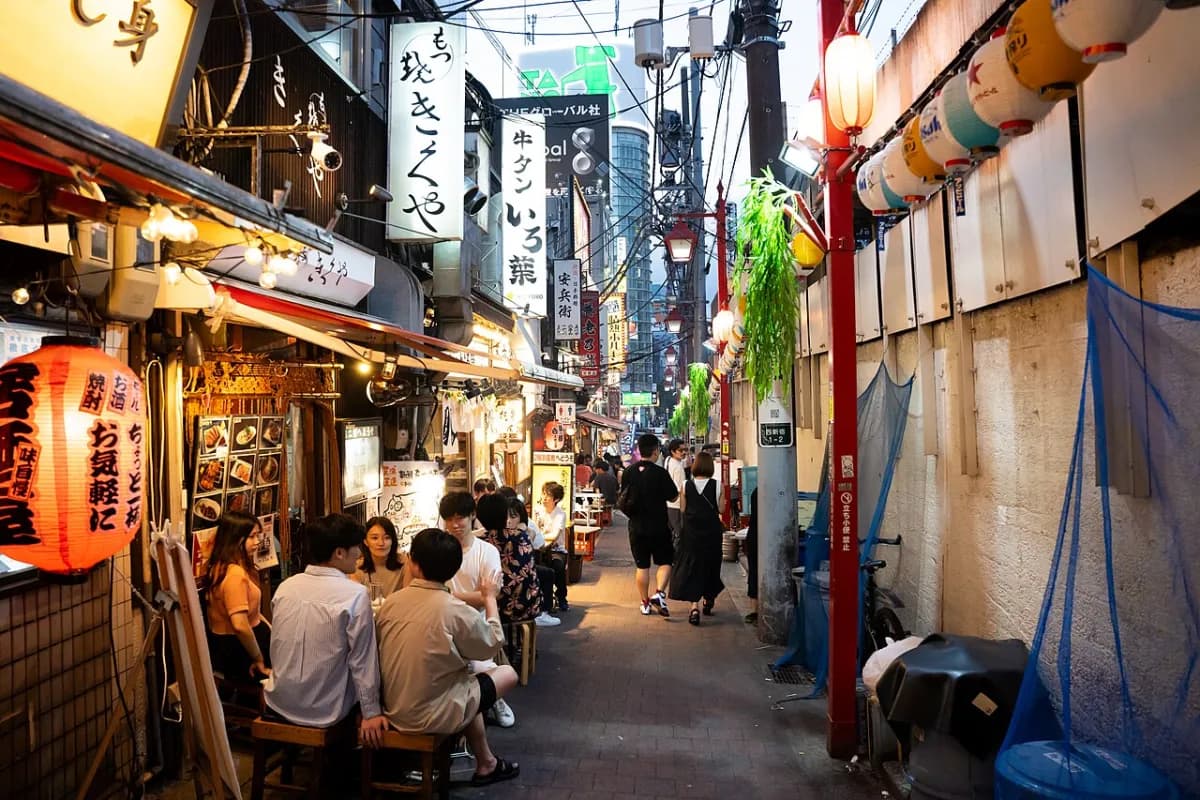
For a great view of the crossing from above, head to the Shibuya Sky observation deck in Shibuya Scramble Square (this one is not free, but the view from the second-floor Starbucks in the Tsutaya building is free if you buy a coffee). If you want to explore more of the neighborhood, check out our hidden izakaya Shibuya guide for the evening.
Shinjuku: Skyline views and green spaces
Shinjuku is Tokyo's busiest district, but it also has some of the city's best free attractions.
Tokyo Metropolitan Government Building observation deck
This is one of Tokyo's best-kept secrets for budget travelers. The Tokyo Metropolitan Government Building in Nishi-Shinjuku has two observation decks on the 45th floor -- both completely free. On a clear day, you get sweeping 360-degree views of the Tokyo skyline, and if you are lucky, Mount Fuji is visible in the distance.
The North Observatory is open until 23:00 (last entry 22:30), making it one of the few places in Tokyo where you can see the city lights at night without paying anything. The South Observatory closes earlier at 17:30 but is generally less crowded.
Practical details:
- Hours: North Observatory 9:30-23:00, South Observatory 9:30-17:30 (closed on certain days for maintenance -- check ahead)
- Location: 5-minute walk from Shinjuku Station West Exit, or directly connected to Tochomae Station on the Oedo Line
- Tip: Visit on a clear winter day for the best chance of seeing Mount Fuji. Go in the evening for the night view.
Shinjuku Gyoen (free entry periods)
Shinjuku Gyoen is one of Tokyo's most beautiful parks, blending Japanese, English, and French garden styles across 58 hectares. While it normally charges a ¥500 admission fee, there are free entry days throughout the year -- notably during certain national holidays and special event periods.
Even when the park is not free, the streets and smaller parks around Shinjuku Gyoen cost nothing to explore. The cherry blossom season (late March to early April) and autumn foliage season (mid-November to early December) are particularly stunning.
Imperial Palace area: History and gardens in the heart of Tokyo
Imperial Palace East Gardens (Kokyo Higashi Gyoen)
The Imperial Palace East Gardens are a beautifully maintained oasis right in the center of Tokyo, and entry is completely free. These gardens sit on the former site of Edo Castle's innermost defense circles, and you can still see the massive stone walls and moat remnants that once protected the shogun.
The gardens are not large, but they are immaculate. Manicured lawns, seasonal flower beds, a Japanese garden with a waterfall, and the ruins of the castle's main tower foundation all make for a peaceful walk. In spring, the gardens are especially beautiful with plum and cherry blossoms.
Practical details:
- Hours: 9:00-16:30 (varies by season; closed Mondays and Fridays)
- Entry: Free. Pick up a plastic token at the gate and return it when you leave
- Location: A short walk from Tokyo Station (Marunouchi Exit) or Otemachi Station
- Tip: Combine this with a walk around the outer moat of the Imperial Palace. The wide path circling the palace grounds is popular with joggers and offers great views of the stone walls, moat, and the surrounding modern skyline.
Ueno and Yanaka: Parks, shrines, and old-town atmosphere
The Ueno-Yanaka area in northeast Tokyo is a treasure for free sightseeing, combining green space, historical shrines, and one of the city's most charming traditional neighborhoods.
Ueno Park and shrine area
Ueno Park is one of Tokyo's largest and most popular public parks, and it is free to enter. The park itself is home to several museums (most charge admission), but the grounds, gardens, and shrine areas are all free.
Highlights you can enjoy for free include:
- Shinobazu Pond -- a large lotus-covered pond with a small island shrine in the center. In summer, the lotus flowers bloom spectacularly
- Ueno Toshogu Shrine -- a golden shrine dating to 1627, dedicated to Tokugawa Ieyasu. The exterior and approach are free to view (the inner peony garden has a small fee)
- Kiyomizu Kannon-do -- a small temple modeled after Kyoto's famous Kiyomizu-dera, with views over the park
- Cherry blossom season -- Ueno Park is one of Tokyo's top cherry blossom spots, with over 800 trees lining the main path
Yanaka neighborhood walk
Just north of Ueno, Yanaka is one of the few Tokyo neighborhoods that survived the World War II bombings largely intact. The result is a rare glimpse of old Tokyo: narrow lanes, wooden houses, small temples, independent craft shops, and friendly neighborhood cats.
The best free walk in Yanaka starts at Nippori Station and follows Yanaka Ginza -- a charming retro shopping street with tiny storefronts, local snack vendors, and a famous sunset viewing spot (called Yuyake Dandan, the sunset stairway) at the top of a set of stone steps.
From there, wander through the temple district. Yanaka has over 70 temples packed into a small area, all free to walk past and many free to enter. The Yanaka Cemetery, though it sounds somber, is actually a peaceful tree-lined walking path that is especially beautiful during cherry blossom season.
This neighborhood is best experienced slowly. Allow 2-3 hours to wander, and do not worry too much about following a set route -- getting slightly lost in Yanaka is part of the charm.
Akihabara, Odaiba, and Shimokitazawa: Unique neighborhoods to explore for free
These three neighborhoods each have a completely different vibe, and all of them are fantastic for free exploration.
Akihabara walking tour
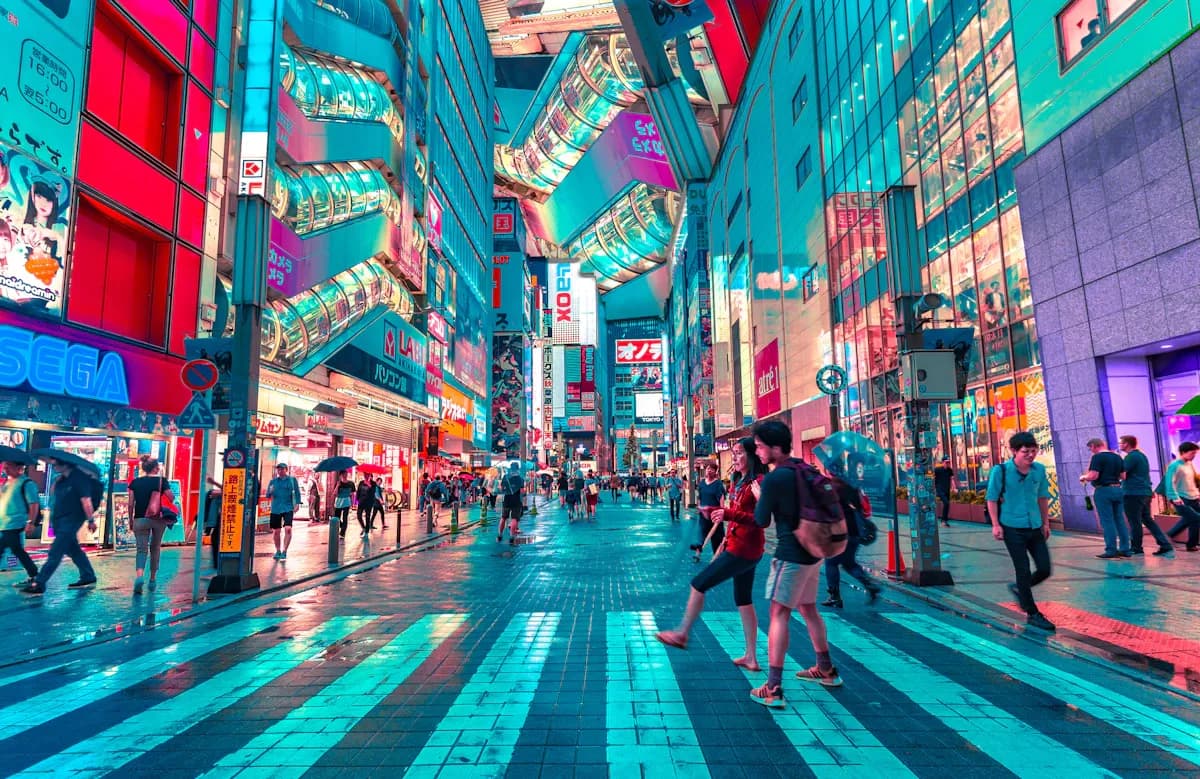
Akihabara -- Tokyo's "Electric Town" -- is an overwhelming sensory experience, and you do not need to buy anything to enjoy it. Multi-story electronics shops, anime and manga megastores, retro gaming arcades, and maid cafes with costumed staff calling out to passersby -- just walking through the main streets is an experience.
Start at Akihabara Station's Electric Town Exit and walk along Chuo-dori, the main boulevard. Duck into the side streets and smaller buildings for the real Akihabara experience -- tiny shops selling vintage game cartridges, figurine collections, and electronics components. On Sundays, Chuo-dori closes to traffic and becomes a pedestrian paradise.
Fans of anime and manga culture will love browsing the multi-floor shops. Window shopping and exploring cost nothing, and the people-watching is world-class.
Odaiba waterfront
Odaiba is a man-made island in Tokyo Bay that offers some of the best free views in the city. The waterfront promenade along Odaiba Seaside Park gives you a panoramic view of the Rainbow Bridge, the Tokyo skyline, and -- on clear days -- a distant view of Mount Fuji.
Free things to do on Odaiba include:
- Walking along the waterfront and beach area
- Visiting the life-size Unicorn Gundam statue outside DiverCity Tokyo Plaza (free to view, and it has a light show in the evenings)
- Exploring the Futuristic architecture around the area, including the distinctive Fuji Television building
- Watching the sunset over Tokyo Bay -- one of the most beautiful free views in the city
The easiest way to reach Odaiba is via the Yurikamome Line from Shimbashi Station. The ride itself offers great views across the bay.
Shimokitazawa vintage shopping streets
Shimokitazawa -- or "Shimokita" as locals call it -- is Tokyo's bohemian quarter. This compact neighborhood just two stops from Shibuya on the Keio Inokashira Line is packed with vintage clothing shops, independent cafes, small live music venues, and street art.
You could spend an entire afternoon browsing the vintage shops and thrift stores without buying anything. The narrow streets have a relaxed, creative energy that feels different from the rest of Tokyo. On weekends, you might stumble across street performers or small outdoor markets.
Bonus: Free shrine and temple festivals (seasonal)
Throughout the year, Tokyo's shrines and temples host free festivals (matsuri) that are some of the most vibrant cultural experiences you can have in Japan. These festivals typically feature food stalls, traditional music and dance performances, portable shrine processions, and a festive atmosphere that draws entire neighborhoods out into the streets.
Some of the best free festivals include:
- Sanja Matsuri (May, Asakusa) -- one of Tokyo's biggest and most famous festivals, centered around Senso-ji. Expect massive crowds, portable shrines carried through the streets, and incredible energy
- Kanda Matsuri (May, odd-numbered years) -- a grand procession through the streets near Kanda Myojin Shrine and Akihabara
- Meiji Shrine Spring and Autumn Grand Festivals -- traditional performances including horseback archery, music, and dance on the shrine grounds
- Setsubun (February) -- bean-throwing ceremonies at temples across the city to ward off evil spirits. Senso-ji and Zojoji Temple are popular spots
- Tori-no-Ichi (November) -- a fair held at Otori Shrine in Asakusa, with beautifully decorated lucky rakes (kumade) and a festive nighttime atmosphere
Festival schedules change each year, so check local event calendars before your trip. The Tokyo Convention and Visitors Bureau website is a reliable source for upcoming dates.
Festivals are free to attend, though you will likely be tempted by the food stalls -- and honestly, festival street food is worth the splurge.
How to plan a full day of free activities in Tokyo
Here are two sample itineraries we recommend for a full day of free sightseeing:
Route A: East Tokyo (Asakusa, Ueno, Yanaka)
Morning: Start at Senso-ji Temple in Asakusa (arrive by 8:30 for a crowd-free experience). Walk through the temple grounds and Nakamise-dori. Stroll through the Tsukiji Outer Market area on your way south.
Afternoon: Head to Ueno Park. Walk around Shinobazu Pond, visit Ueno Toshogu Shrine, and enjoy the park grounds. Then walk north into Yanaka for a slow wander through the old neighborhood streets and Yanaka Ginza.
Route B: West Tokyo (Harajuku, Shibuya, Shinjuku)
Morning: Start at Meiji Shrine for a peaceful forest walk. Then explore Takeshita Street and the Harajuku backstreets.
Afternoon: Walk to Shibuya Crossing and the Hachiko statue. Head to Shinjuku for the free observation deck at the Tokyo Metropolitan Government Building -- time it for late afternoon so you can watch the daylight fade into city lights.
Both routes are walkable with minimal train rides, and everything listed is free. The only costs are transportation and any food or drinks you choose to buy.
Tips for free sightseeing in Tokyo
- Get a transit pass. While not free, a 24-hour Tokyo Metro pass (¥600) or a 72-hour pass (¥1,500) dramatically reduces transport costs and lets you hop between neighborhoods easily
- Carry water. Vending machines are everywhere, but a refillable bottle saves you ¥100-¥150 per drink. Many parks have free water fountains
- Visit on weekdays. Most free attractions are significantly less crowded on weekdays compared to weekends and holidays
- Check for free museum days. Several Tokyo museums offer free admission on certain days (often the first Sunday of the month or national holidays)
- Bring cash for incidentals. While the attractions are free, you will want some cash for train fares, drinks, and the occasional street snack
Make the most of your Tokyo trip
Tokyo is a city where the best experiences often cost nothing. A morning at a 1,400-year-old temple, an afternoon watching the world go by at the busiest intersection on earth, an evening gazing at the city lights from a free observation deck 200 meters up -- these are the moments that make Tokyo unforgettable, and none of them require a ticket.
Combine these free activities with affordable food options like street food in Asakusa and conveyor belt sushi, and you can have an incredible Tokyo experience without breaking the bank.