Sushiro, Kura, Hama or Uobei? We rank the 6 best sushi chains in Japan, with 2026 plate prices, English support, and where to try each one in Tokyo.
Introduction
Walk ten minutes in any direction from a major Tokyo station and you will pass the same sushi logos over and over: Sushiro, Kura Sushi, Hama Sushi, Uobei. These national chains serve a huge share of the sushi eaten in Japan, and they are nothing like the sad supermarket sushi most visitors know from home. Plates start around ¥110, the fish is fresh, and the ordering tech is half the fun.
The catch is that the brands genuinely differ. One is built for families, one for speed, one for the lowest possible bill, and one for fish that outclasses restaurants triple its price. We have eaten at every chain on this list, most of them repeatedly, and ranked them for a first visit to Tokyo. There is also a dedicated verdict on the question we get asked most: Uobei vs Sushiro.
If you want branch-level picks with maps and translated Japanese reviews, our guide to the best conveyor belt sushi in Tokyo goes deeper on specific locations. This page is about choosing the right brand.
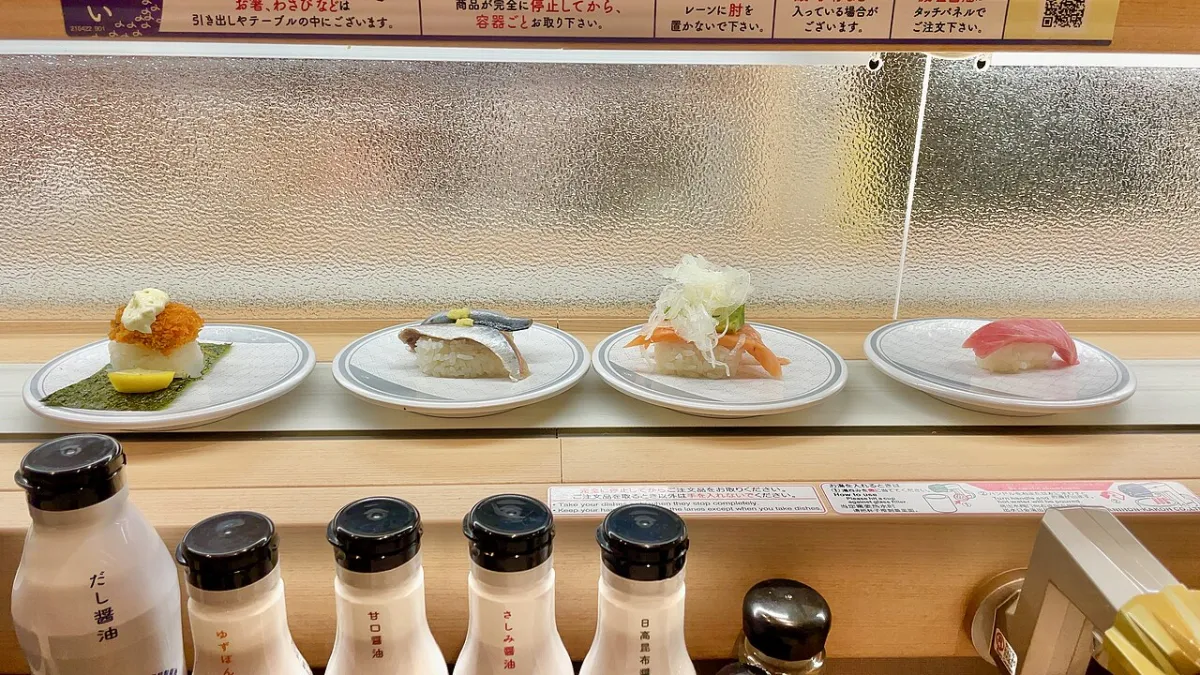
Photo by Kyu3a / Wikimedia Commons (CC BY-SA 4.0)
Quick picks: sushi chains in Japan compared
Here is the whole article in one table. Prices are the cheapest regular plate as of mid-2026, tax included; central Tokyo branches of some chains charge a little more.
| Rank | Chain | Plates from | Style | English support | Best for |
|---|---|---|---|---|---|
| 1 | Sushiro (スシロー) | ¥120 | Rotating belt + express lane | Full English touchscreen | Best overall value and variety |
| 2 | Kura Sushi (くら寿司) | ¥115 | Belt + capsule-toy game | Full English touchscreen | Families and first-timers |
| 3 | Hama Sushi (はま寿司) | ¥110 | Direct delivery lanes | English, Chinese, Korean panels | Cheapest full meal |
| 4 | Uobei / Genki Sushi (魚べい) | ¥120 | No belt, triple express lanes | Full English touchscreen | Speed and solo diners |
| 5 | Heiroku Sushi (平禄寿司) | ¥140 | Classic rotating belt | Limited, point and grab | Old-school belt experience |
| 6 | Nemuro Hanamaru (根室花まる) | ¥170 | Belt + made-to-order counter | English picture menu | A premium Hokkaido splurge |
Short version: go to Sushiro if you want one safe answer, Kura Sushi with kids, Hama Sushi on a tight budget, and Uobei when you are hungry and in a hurry. Nemuro Hanamaru is the one worth queuing for.
1. Sushiro (スシロー): Best sushi chain in Japan overall
Sushiro is Japan's largest sushi chain by revenue, with more than 500 restaurants across the country and a growing overseas empire. Scale is exactly why it wins this ranking. The company buys fish at volumes nobody else can match, so a ¥120 plate of maguro at Sushiro simply tastes better than it has any right to.
Since late 2022 Sushiro has priced by location type, so a suburban branch starts at ¥120 while central Tokyo shops run slightly higher, with plate tiers stepping up to around ¥180 and ¥360. The menu is enormous: a hundred-plus items spanning nigiri, gunkan, ramen, udon, karaage and a serious dessert lineup. Seasonal fairs rotate every few weeks, and those limited plates (fatty tuna specials, Hokkaido shrimp, regional collaborations) are consistently the best things in the building.
Ordering is a full English touchscreen, and plates arrive on a rotating belt plus a dedicated express lane for your own orders. The Sushiro app lets you take a queue number remotely, which matters because popular branches draw 30 to 60 minute waits at dinner.
A solid meal here lands between ¥1,000 and ¥2,500 per person. For the most convenient Tokyo branches, including the Shibuya Ekimae shop near the scramble crossing, see our Tokyo conveyor belt sushi guide.
- Official site: akindo-sushiro.co.jp
Photo by RuinDig/Yuki Uchida / Wikimedia Commons (CC BY 4.0)
2. Kura Sushi (くら寿司): Best for families and pure fun
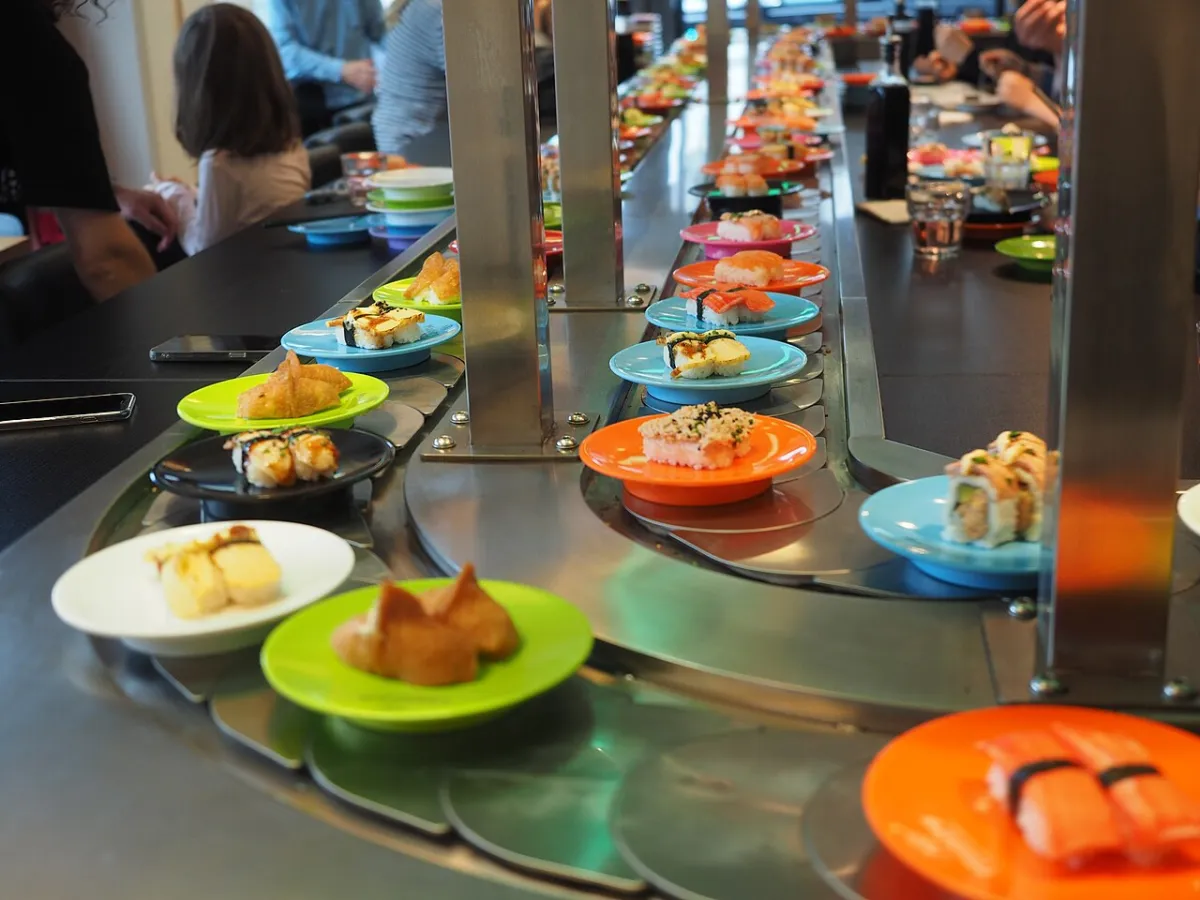
Kura Sushi turns dinner into a game. Feed five finished plates into the slot at your table and the screen plays a Bikkura Pon lottery; win, and a capsule toy drops out beside you. Children lose their minds over this, and plenty of adults quietly keep count of their plates too.
The food holds up. Kura brands itself muten (無添), meaning no artificial sweeteners, preservatives or chemical seasonings, and regular plates start at ¥115. The dessert menu is the strongest of any chain here, and limited-run anime collaborations (past fairs have covered everything from Demon Slayer to Chiikawa) keep the menu screens lively.
For visitors, the smart move is one of Kura's global flagship stores, built for international guests with multilingual touchscreens. Tokyo has four of them: Asakusa ROX (five minutes from Senso-ji), Harajuku, Ginza, and the enormous Skytree-mae branch in Oshiage. Flagship pricing starts higher, at around ¥150 a plate. Reserve through the Kura Sushi app on weekends or expect a wait.
Budget ¥1,000 to ¥2,200 per person at regular branches, a little more at the flagship.
- Official site: kurasushi.co.jp
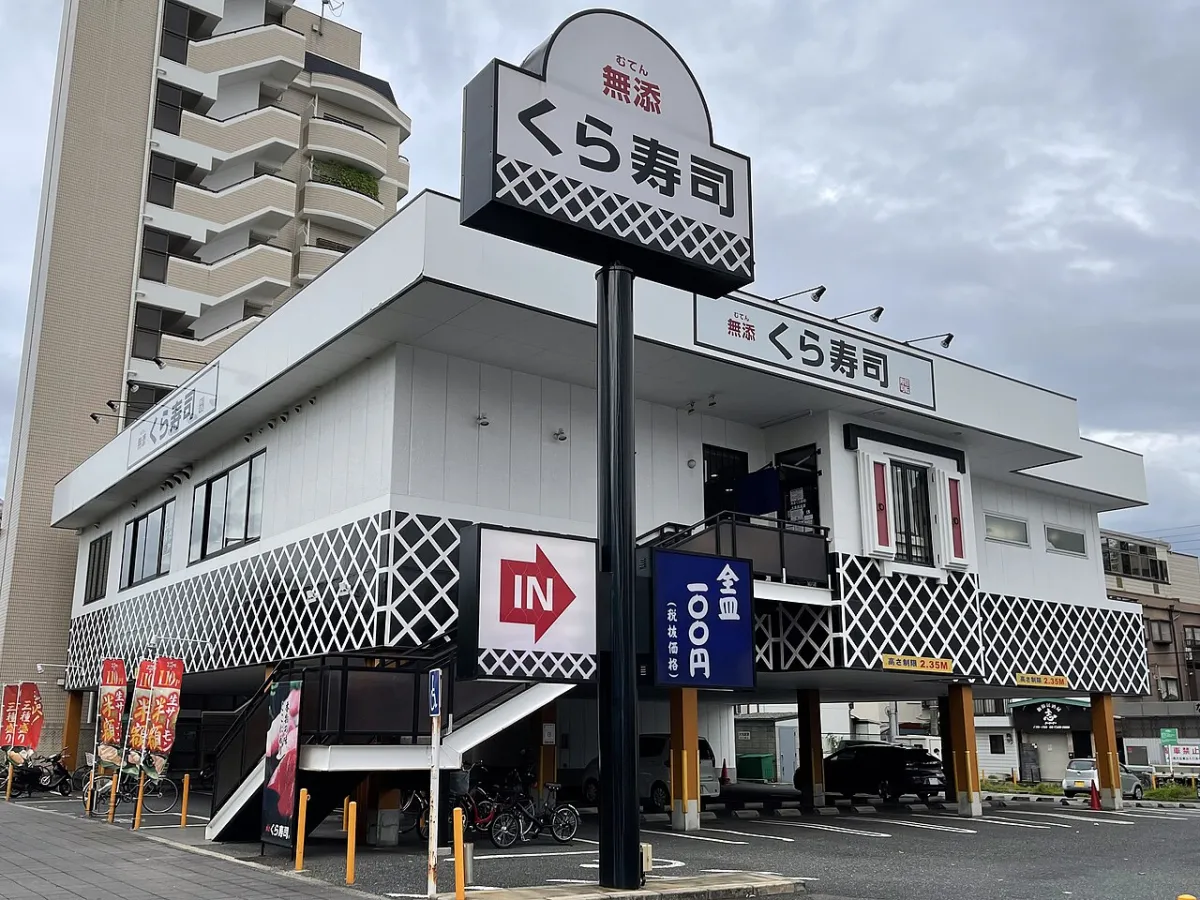
Photo by Tokumeigakarinoaoshima / Wikimedia Commons (CC BY-SA 4.0)
3. Hama Sushi (はま寿司): Cheapest plates in the country
Hama Sushi, run by the Zensho group behind the Sukiya beef bowl chain, is where Japan eats sushi on a budget. Most plates at regular branches cost ¥110, the lowest standard price among the majors, and even the premium end of the menu tops out around ¥330. Two people can eat well here and still see change from ¥2,000.
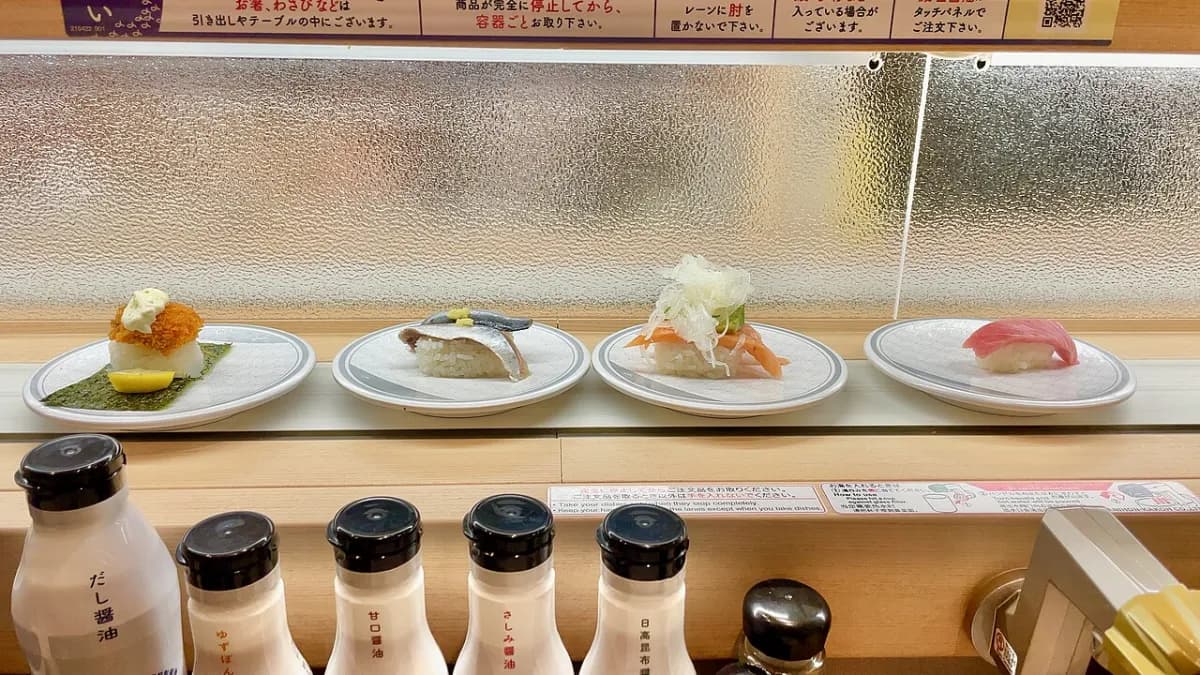
The sleeper feature is the soy sauce rack. Every table carries five varieties: dashi soy, sweet Kyushu-style soy, sashimi soy, yuzu ponzu and Hokkaido kombu soy. Cycling a single plate of salmon through all five is a legitimately good time and something no other chain offers.
Newer branches skip the rotating belt entirely and send every order straight to your seat on a delivery lane, so nothing sits out drying under the lights. Touch panels support English, Chinese and Korean. Hama's one weakness is polish: shops are functional rather than charming, and central Tokyo branches (Shibuya, Shinjuku, around Tokyo Station) price some items above the suburban baseline.
- Official site: hama-sushi.co.jp
4. Uobei and Genki Sushi (魚べい / 元気寿司): Fastest sushi in Japan
First, the naming confusion: Uobei and Genki Sushi are sister brands under the same parent, Genki Global Dining Concepts (renamed from Genki Sushi Co. in July 2024). Genki Sushi is the older name you may know from Hawaii, Hong Kong or Singapore; Uobei is the domestic format the company pushes in Japan. Same kitchen philosophy, same DNA. In October 2025 the group even opened a hybrid GENKI SUSHI × Uobei branch near Ueno Station in Tokyo.
The format is the draw. There is no rotating belt at all. You order on a touchscreen with full English support, and plates shoot out of the kitchen on straight express lanes, up to three stacked tiers of them, riding trays shaped like bullet trains. Food typically reaches your seat in a minute or two, and because every piece is made to order, nothing has been circling a belt for twenty minutes.
Plates start around ¥120 and the menu is tighter than Sushiro's, padded with sides like fries, miso soup and soft-serve. The Shibuya Dogenzaka Uobei, three minutes from the scramble crossing, has become the default first stop for first-time visitors; expect a queue at peak hours but rapid turnover.
- Official sites: uobei.info / genkisushi.info
5. Heiroku Sushi (平禄寿司): The old-school belt
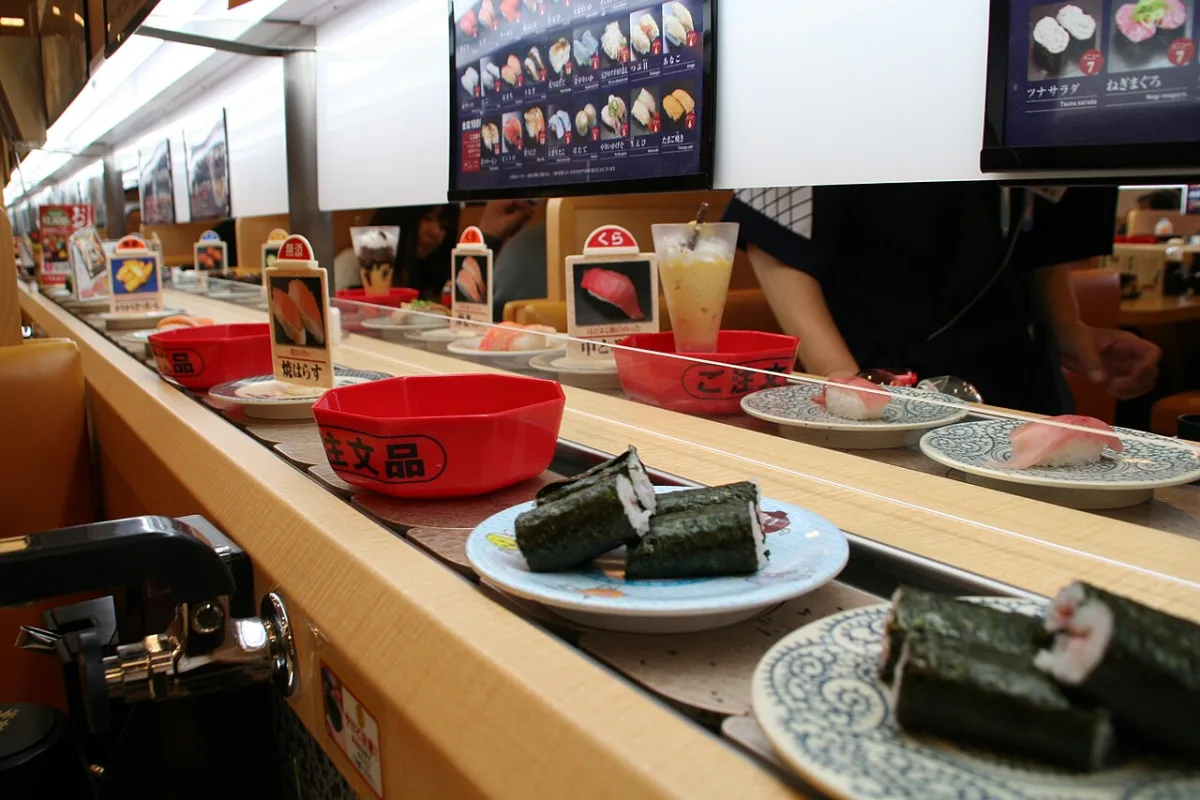
Every other big chain has been quietly killing the actual conveyor belt in favor of touchscreens and delivery lanes. Heiroku Sushi still runs the classic format: real plates circling a real belt, grab what looks good as it passes. If that image is what brought you to Japan in the first place, this is your chain.
Plates run roughly ¥140 to ¥350, and the fish is honest for the price, with reviewers singling out the engawa and chutoro. English support is thin, but the belt does not need translating. Watch, grab, stack your plates, pay by the count.
Heiroku's footprint is strongest in northern Japan, and Tokyo has only a handful of branches. The useful one for visitors sits on Omotesando, five minutes from Meiji-jingumae Station, where a row of cheap sushi plates makes a funny contrast with the luxury boutiques outside. There is another near Shin-Okubo in the Shinjuku area, covered in our Shinjuku conveyor belt sushi guide.
- Official site: heiroku.jp
6. Nemuro Hanamaru (根室花まる): The premium chain worth a queue
Nemuro Hanamaru is what happens when a chain stays close to its fishing port. Born in Nemuro at the far eastern tip of Hokkaido, it ships in seafood that most Tokyo kaiten-zushi never sees: thick ikura that pops clean, sweet Hokkaido uni, seasonal catches like sanma in autumn, all chalked up on a daily board.
Plates run about ¥170 to ¥600, so a satisfying meal lands between ¥2,000 and ¥4,000. That is double a Sushiro bill and still a bargain for the quality, which is why the flagship Tokyo branch at KITTE Marunouchi (directly across from Tokyo Station) draws waits past 90 minutes on weekends. No reservations; you pull a numbered ticket and wander the KITTE building until your turn.
Rank it last only in the sense that it is the least everyday option. If you have one chain meal in Tokyo and budget is not the deciding factor, this is the one we would send you to. Full branch details are in our Tokyo kaiten-zushi guide.
- Official site: sushi-hanamaru.com
Uobei vs Sushiro: which should you choose?
This is the head-to-head most visitors actually face, since both chains have flagship-level branches within a short walk of Shibuya's scramble crossing. They are also the two most different chains on this list.
Ordering and delivery. Sushiro is a hybrid: a rotating belt carries plates past your seat while a touchscreen sends your specific orders down an express lane. Uobei has no belt at all. Everything is touchscreen, and plates arrive on up to three stacked straight lanes, often on a bullet-train tray, usually within a minute or two of tapping.
Price. Nearly identical at the entry point, ¥120 for the cheapest plates at standard branches of either chain. Sushiro's tiers climb higher (¥180 and ¥360 plates are where its best fish lives), so an equivalent appetite usually costs slightly more there.
Menu and quality. Sushiro wins on breadth by a wide margin: more nigiri varieties, rotating seasonal fairs, ramen, desserts. Its premium tiers also set a higher quality ceiling. Uobei counters with consistency, because made-to-order means no plate has ever sat on a belt, and the standard items (engawa, ikura, aburi salmon) punch at or above Sushiro's base tier.
Queues and apps. Sushiro is friendlier to planners: its app has English support and lets you take a ticket remotely, then walk the neighborhood until your number is close. Uobei's group app is aimed at Japanese users, so expect to queue in person, but seats turn over fast and solo diners slot in quickly.
Our verdict. Choose Uobei when you are solo, hungry now, or traveling with someone who will grin at a bullet train delivering their dinner. Choose Sushiro for groups, indecisive eaters, and anyone who wants to hunt seasonal specials. If you can spare two meals in Shibuya, do both; the contrast is the best crash course in modern Japanese sushi chains you can get for under ¥5,000 total.
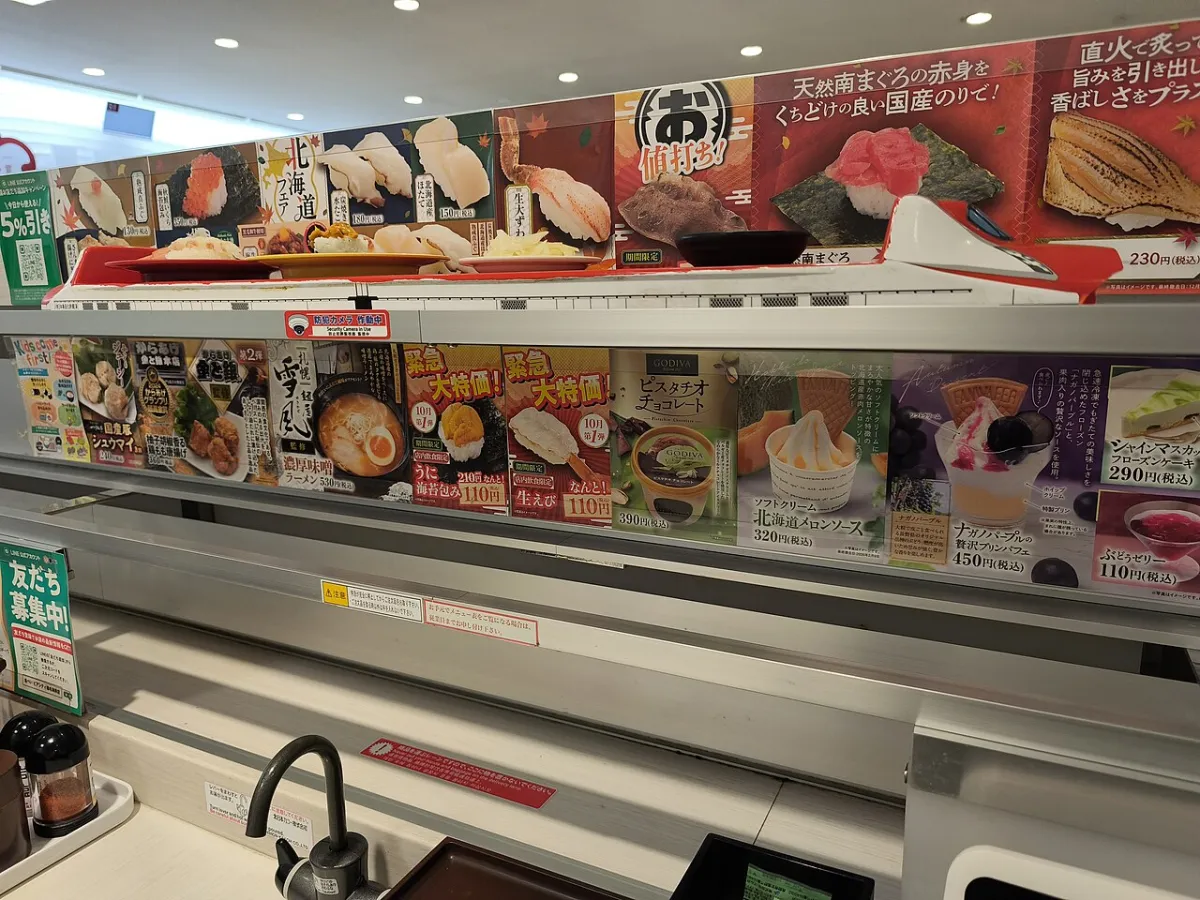
Photo by RuinDig/Yuki Uchida / Wikimedia Commons (CC BY 4.0)
Where to find the best sushi chains in Tokyo
Every chain above has branches across the capital, but a few areas make chain-hopping easy:
- Shibuya puts Uobei (Dogenzaka) and Sushiro (Ekimae) within a ten-minute walk of each other, ideal for the head-to-head above.
- Tokyo Station / Marunouchi is Nemuro Hanamaru territory, inside the KITTE building at the Marunouchi South Exit.
- Asakusa has Kura Sushi's global flagship at ROX, an easy pairing with a Senso-ji morning.
- Shinjuku covers the budget end, with Hama Sushi and Heiroku branches near the station; our Shinjuku guide rounds up the strongest picks in the area.
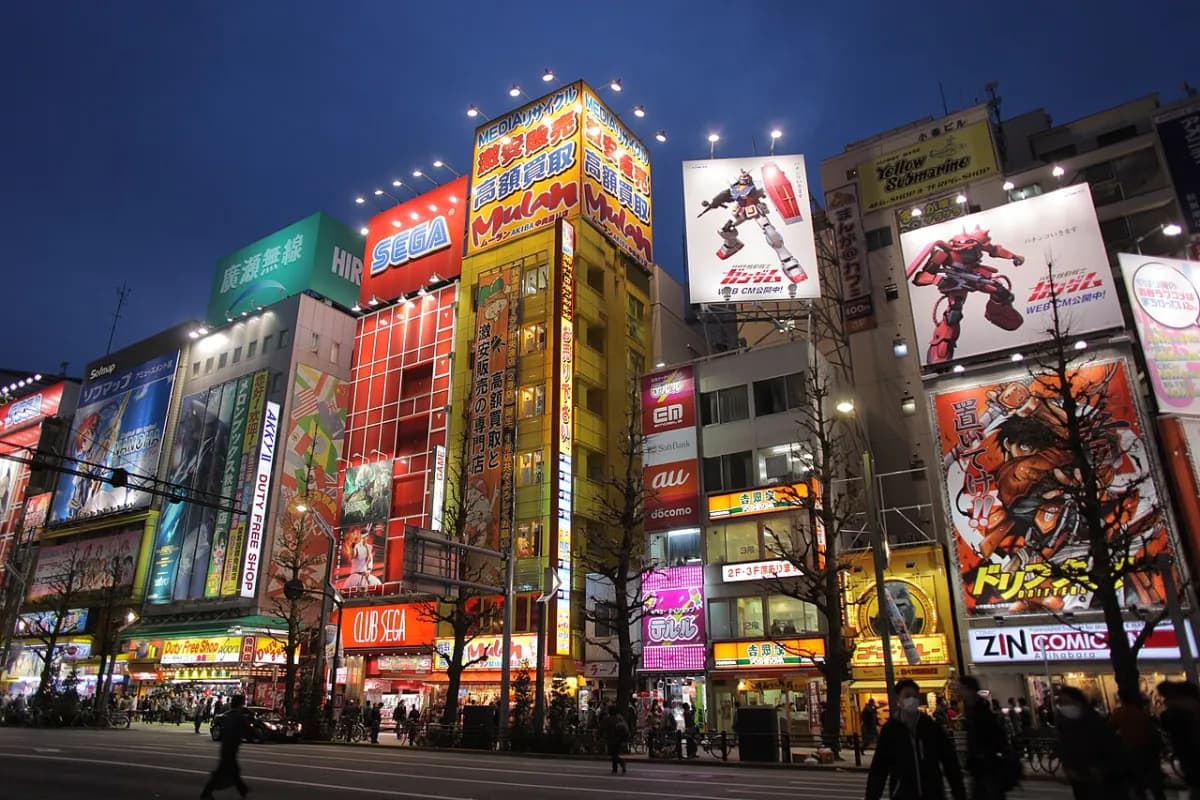
- Akihabara has a station-front Sushiro with shorter waits than Shibuya, plus Kura Sushi one stop away in Okachimachi, detailed in our Akihabara conveyor belt sushi guide.
Heading west after Tokyo? The kaiten-zushi format was invented in Osaka in 1958, and the city still does it with its own flavor. Our Osaka conveyor belt sushi guide covers the originals alongside the national chains.
Plan your sushi chain crawl
You could eat at a different sushi chain every night of a week in Tokyo and never repeat an experience: a prize game one evening, a bullet-train tray the next, Hokkaido ikura to finish. Plates from ¥110 mean experimenting costs almost nothing, and every chain on this list seats walk-ins.
Start with the ranking, trust the Uobei vs Sushiro verdict, and save room for Nemuro Hanamaru before you leave. For specific branches, station directions and translated local reviews, our complete Tokyo conveyor belt sushi guide picks up where this one ends.