The 5 best gyoza restaurants in Shinjuku, from crispy plates at Gyoza no Fukuho to a 24-hour Kabukicho shop. Hours, prices and English menu notes.
Introduction
Shinjuku is one of Tokyo's greatest food neighborhoods, and when it comes to gyoza -- those irresistible pan-fried dumplings with crispy golden bottoms and juicy fillings -- this district delivers like few others. From specialist gyoza restaurants that have perfected a single recipe over decades to rowdy late-night bars in Kabukicho where dumplings arrive alongside cold beer at 2am, Shinjuku has a gyoza spot for every mood, budget, and hour of the day.
We have spent years eating our way through Shinjuku's gyoza scene, and in this guide we share five gyoza restaurants, plus guides to the best gyoza areas, standing bars and late-night options, along with practical tips on how to order, the different styles of gyoza you will encounter, and the best areas in Shinjuku to go dumpling hunting. Whether you are looking for a quick lunch near the station or a full evening of gyoza and beer hopping through Kabukicho's backstreets, this guide has you covered.
Quick guide: types of gyoza you will find in Shinjuku
Before we get into the restaurants, here is a quick primer on the three main gyoza styles you will encounter in Tokyo:
Yaki-gyoza (焼き餃子) -- Pan-fried gyoza: This is the default style in Japan and the one most people picture. The dumplings are lined up in a hot oiled pan, steamed with a splash of water, then crisped until the bottoms form a golden, crunchy crust called hane (wings). When done well, the contrast between the crackling base and the soft, juicy wrapper is extraordinary. Most restaurants on this list serve yaki-gyoza, while Rouhen Gyozakan specializes in Chinese-style shaped dumplings.
Sui-gyoza (水餃子) -- Boiled gyoza: Softer and more delicate, these are boiled in water or light broth and served swimming in their cooking liquid or drained with a dipping sauce. The wrappers are thicker and chewier than yaki-gyoza. Sui-gyoza are closer to the original Chinese jiaozi and are a great lighter option.
Age-gyoza (揚げ餃子) -- Deep-fried gyoza: The crispy wildcard. These are fully deep-fried until the wrappers turn shattering and golden all over. They are less common as a main dish but show up frequently on izakaya menus as a beer snack.
How to order gyoza:
- A standard serving is 6 pieces, sometimes 5 or 8 depending on the shop
- Dipping sauce is usually a mix of soy sauce, rice vinegar, and ra-yu (chili oil) -- mix your own at the table to taste
- At specialist shops, ordering multiple plates is completely normal and expected
- "Gyoza hitotsu" (餃子一つ) means one plate of gyoza
- At ticket-machine shops, just press the gyoza button and hand your ticket to the staff
1. Gyoza no Fukuho (餃子の福包) — The Shinjuku gyoza specialist
If you only eat gyoza at one place in Shinjuku, make it Gyoza no Fukuho. This dedicated gyoza restaurant has built its entire reputation around doing one thing exceptionally well: pan-fried dumplings with thin, crispy wrappers and a pork-and-vegetable filling seasoned with garlic and ginger. The hane (crispy skirt) that connects each dumpling is paper-thin and shatters at first bite.
Fukuho takes the classic Tokyo-style gyoza formula and executes it with obsessive precision. The filling is juicy without being greasy, the garlic is present but not overwhelming, and the bottom crust achieves that perfect golden crunch every single time. It is the kind of place where you order one plate, immediately order a second, and then seriously consider a third.
What to order
The Yaki-gyoza (6 pieces, ~350 yen) is the star -- order at least two plates. The Sui-gyoza is also excellent if you want to compare styles. Pair with a cold draft beer or a lemon sour for the full experience. A weekday lunch set was listed at around 590 yen in 2023 (check the current price). They also serve simple rice sets if you want a more filling meal, but honestly, the gyoza is so good that most regulars skip everything else.
Practical info
- Address: 2-8-6 Shinjuku, Shinjuku-ku, Tokyo (KDX Shinjuku 286 Building, 1F)
- Nearest station: 2-minute walk from Shinjuku-gyoemmae Station (Exit 1)
- Hours: Weekdays 11:30-15:30 (last order 15:00) and 17:00-23:00 (last order 22:20); Saturday, Sunday and holidays 11:30-23:00
- Budget: 800-1,500 yen per person
- English menu: Limited -- picture menu available; pointing works well
- Insider tip: The counter seats facing the open kitchen are the best spots. You can watch the gyoza being assembled and pan-fried to order. Lunch service is less crowded than the evening rush, but the atmosphere is better at night when the beer is flowing.
2. Rouhen Gyozakan Shinjuku Honten (老辺餃子舘 新宿本店) — Shenyang-style shaped dumplings
Rouhen Gyozakan is the place to go when you want to see how far gyoza can stray from the crispy pan-fried plate. It serves Chinese-style dumplings, closer to Shenyang jiaozi than to Japanese yaki-gyoza, and the signature is a set of five hand-shaped steamed varieties: rooster-comb, phoenix-eye, cat-ear, rape-blossom and horseshoe. Each shape is ordered by type at 396 yen. Tabelog's shop notes say the gyoza are made by a certified Chinese dim-sum chef.
It is also one of the easiest gyoza stops for a first-time visitor. The restaurant is a one-minute walk from the JR South Exit, seats about 100 people, is entirely non-smoking and takes cards, Suica and PayPay. Ordering is by touch panel in Chinese and English, so you can build a meal without any Japanese. The familiar pan-fried and boiled gyoza are on the menu too, so a group can mix the two styles.
One practical note: the menu does not say how many pieces come in each 396-yen shaped order, so start with two or three types and add more once you see the portion.
What to order
The shaped gyoza (396 yen per type; the MIX A and MIX B sets are 792 yen) are the reason to come. Add a plate of pan-fried gyoza (8 pieces, 1,298 yen) as a familiar baseline, and try the mala boiled gyoza (8 pieces, 1,485 yen) if you like chili heat.
Practical info
- Address: Ogawa Building 3F, 1-18-1 Nishi-Shinjuku, Shinjuku-ku, Tokyo
- Nearest station: 1-minute walk from the JR Shinjuku Station South Exit (the building across from Lumine 1, between Wendy's and a drugstore; look for the yellow sign)
- Hours: Monday-Friday 11:30-15:00 (food last order 14:30) and 17:00-23:00 (food last order 22:30); Saturday 11:30-23:00 (last order 22:30); Sunday and holidays 11:30-22:00 (last order 21:30)
- Closed: Not stated on Tabelog -- check Tabelog or Google Maps before you go
- Budget: About 3,000-3,999 yen for dinner and under 999 yen for lunch (Tabelog)
- English menu: Yes -- touch-panel ordering in Chinese and English
- Payment: Cards, Suica and PayPay accepted
- Smoking: Entirely non-smoking
- Tabelog: Rouhen Gyozakan Shinjuku Honten
- Insider tip: This is Chinese-style gyoza, not Japanese yaki-gyoza, so order it as a different experience from Gyoza no Fukuho rather than a replacement. With about 100 seats, it is a comfortable fallback when smaller shops have a line.
3. Gyoza no Anta, Shinjuku Omoide Yokocho (餃子の安亭 新宿思い出横丁店) — Cheap plates at the end of Memory Lane
Gyoza no Anta sits at the end of Omoide Yokocho, up a flight of stairs in a building with a Matsuya. It is a sit-down gyoza izakaya, not a standing bar, with room for 78 people and a menu of more than fifteen gyoza items. That makes it the practical option when the stalls in the alley are full or you want a proper table.
Prices are low. The house yaki-gyoza is 470 yen, the oversized Tairin gyoza is 610 yen, and a gyoza set meal is 730 yen, so a solo lunch or a few plates with beer stays within about 1,000-1,999 yen (Tabelog dinner budget). English and photo menus are listed on Tabelog, which helps with the long gyoza list.
One warning: Tabelog lists every seat as smoking-allowed. If smoke bothers you, pick another restaurant in this guide, such as Rouhen Gyozakan or Gyoza no Fukuho. The kitchen may also close early if it runs out of stock, so do not leave it until the last order at 23:00.
What to order
Start with Anta no yaki-gyoza (470 yen) and the oversized Tairin gyoza (610 yen). For a full meal, the gyoza set meal (730 yen) is the cheapest way to eat here; the cheese hane-tsuki gyoza (900 yen) is the one to add for beer.
Practical info
- Address: Five K Building 2F, 1-2-1 Nishi-Shinjuku, Shinjuku-ku, Tokyo
- Nearest station: 3-minute walk from Shinjuku-nishiguchi Station (Toei Oedo Line) Exit D3, or 5 minutes from the JR Shinjuku West Exit. Take the stairs of the building with a Matsuya, at the end of Omoide Yokocho on the west side of the underpass
- Hours: Monday-Friday 11:30-15:00 and 17:00-23:45; Saturday, Sunday and holidays 13:00-23:30; food last order 23:00 every day. May close early if stock runs out
- Closed: New Year holidays
- Budget: About 1,000-1,999 yen per person for dinner (Tabelog)
- English menu: Yes -- English and photo menus listed on Tabelog
- Smoking: Smoking is allowed at every seat
- Tabelog: Gyoza no Anta, Shinjuku Omoide Yokocho
- Insider tip: The entrance is easy to miss because you go up the stairs of a building with a Matsuya, not through a street-level door. If you want a smoke-free table, choose another restaurant in this guide.
4. Shinjuku Hikeshi Gyoza (新宿火消し餃子) — 24-hour gyoza in Kabukicho
Shinjuku Hikeshi Gyoza is open 24 hours a day, every day, in Kabukicho. That alone makes it the most reliable answer to the late-night question in this guide: whether you arrive at 2am after a Golden Gai crawl or at 7am before an early train, the kitchen is working. It is a gyoza izakaya on the first and second floors of a Kabukicho building, a three-minute walk from Seibu-Shinjuku Station.
It is also friendly to visitors. Tabelog lists English and Simplified Chinese menus and English- and Chinese-speaking staff. The kakekomi yaki-gyoza comes in 10 pieces for 880 yen, and most five-piece specialty gyoza are 560 yen, so trying several kinds is cheap. The menu also includes a vegetable gyoza that is listed as vegetarian by name, and a Nagoya Cochin chicken taki-gyoza served nabe-style.
Smoking is limited to a separate area for heated tobacco only. Tabelog marks the vegetarian and vegan items, but the vegetarian label rests on the menu item name, so confirm with staff before relying on it.
What to order
The kakekomi yaki-gyoza (10 pieces, 880 yen) is the standard order, and the kakekomi sui-gyoza (boiled, 10 pieces, 935 yen) gives you the other style. If you want something more like a hot pot, try the Nagoya Cochin chicken taki-gyoza (1,078 yen).
Practical info
- Address: Dai-58 Tokyo Building 1F-2F, 1-12-2 Kabukicho, Shinjuku-ku, Tokyo
- Nearest station: 3-minute walk from Seibu-Shinjuku Station; 5 minutes from the JR Shinjuku Station East Exit; 5 minutes from Shinjuku on the Marunouchi Line
- Hours: Open 24 hours, every day
- Budget: About 2,000-2,999 yen per person for dinner (Tabelog)
- English menu: Yes -- English and Simplified Chinese menus, plus English- and Chinese-speaking staff (Tabelog)
- Vegetarian: A vegetable gyoza (5 pieces, 560 yen) is marked vegetarian on the menu; it is not confirmed vegan
- Smoking: Separate area for heated tobacco only
- Website/Tabelog: Official site and Tabelog
- Insider tip: Because it never closes, this is a good last stop at the end of a Kabukicho crawl, or a fixed meeting point if your group splits up for the night.
5. Shibuya Gyoza, Shinjuku Nishiguchi (渋谷餃子 新宿西口店) — Cheap plates and big platters
Despite the name, this Shibuya Gyoza is in Nishi-Shinjuku. Shibuya Gyoza is the chain's brand name, and this branch is on the second floor of a building about five minutes' walk west of Shinjuku Station, so do not travel to Shibuya looking for it.
It is a good pick for a budget evening. Yaki, fried or boiled gyoza are 350 yen a plate, a four-kind sampler is 1,100 yen, and a 20-piece platter of pan-fried gyoza is 1,400 yen, which suits a group. Negi-shio gyoza is 480 yen. Weekday opening hours run straight from 11:30 to 23:30 with no afternoon break listed, so it also works for an off-hours lunch or an early dinner.
Tabelog does not state how many pieces come on a 350-yen plate, so ask when you order. Cards are accepted, but QR payments are not.
What to order
Order the yaki-gyoza (350 yen a plate) first, then the four-kind gyoza sampler (1,100 yen) to compare fillings. For three or more people, the big-plate yaki-gyoza (20 pieces, 1,400 yen) is the better value.
Practical info
- Address: Atlas Nishi-Shinjuku Building 2F, 1-15-8 Nishi-Shinjuku, Shinjuku-ku, Tokyo
- Nearest station: 5-minute walk (west side) from JR / Odakyu / Keio Shinjuku Station
- Hours: Monday-Friday 11:30-23:30 (food last order 23:00); Saturday 12:00-23:30 (last order 23:00); Sunday and holidays 12:00-23:00 (last order 22:30)
- Closed: Not stated on Tabelog -- check Tabelog or Google Maps before you go
- Budget: About 1,000-1,999 yen per person for dinner (Tabelog)
- English menu: Not confirmed -- check the official site / Google Maps
- Payment: Cards accepted; no QR payments
- Tabelog: Shibuya Gyoza, Shinjuku Nishiguchi
- Insider tip: Check the address before you set off, because the branch name says Shibuya but the shop is in Nishi-Shinjuku, near the skyscraper district.
6. Kabukicho gyoza crawl — Stadium-style dumpling hopping
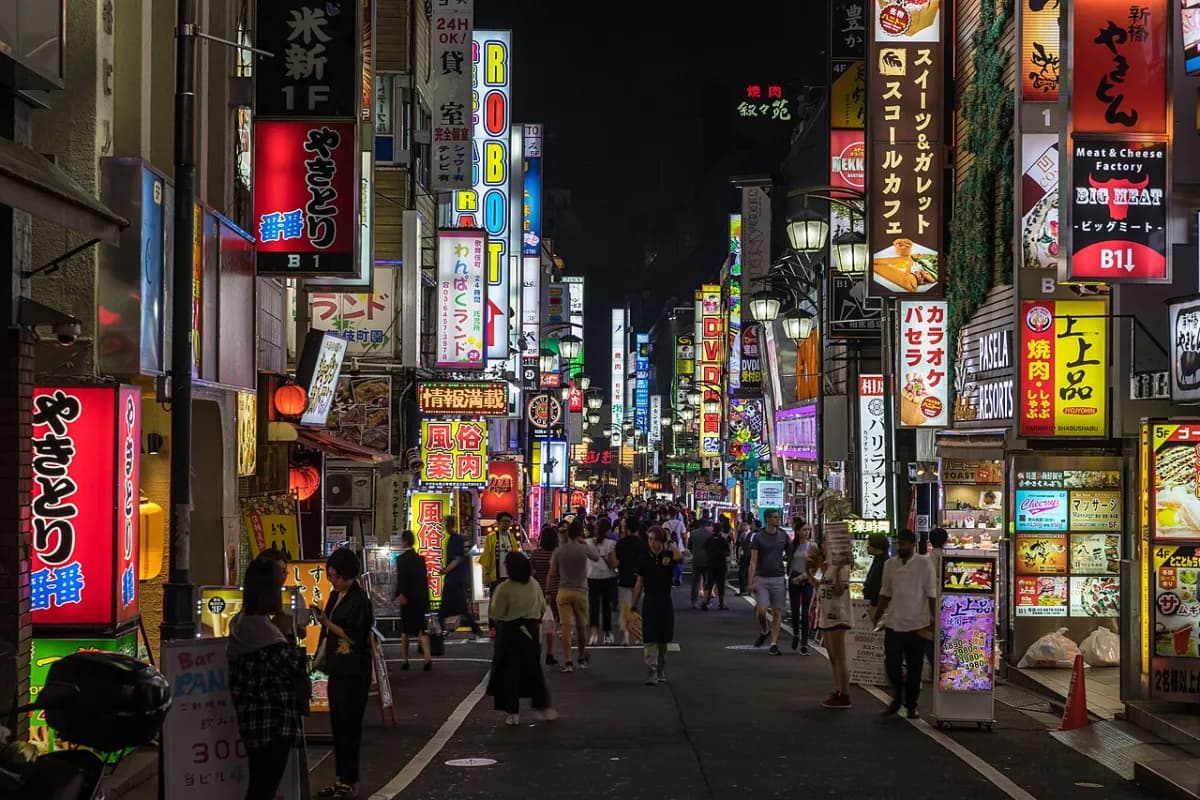
Kabukicho, Shinjuku's famous entertainment district, is one of the best areas in all of Tokyo for a self-guided gyoza crawl. The neon-lit streets and narrow alleys are packed with small restaurants, izakaya, and food stalls, many of which serve their own take on gyoza. Rather than committing to a single restaurant, the Kabukicho approach is to hop between spots, eating a plate of gyoza and a drink at each one.
Think of it as a gyoza stadium without the formal structure -- you are the curator of your own dumpling tour. Shinjuku Hikeshi Gyoza (restaurant 4 above) is a ready-made stop in the middle of it, open 24 hours. The density of options in Kabukicho means you can easily hit three or four spots in a single evening, comparing styles and discovering your personal favorite.
How to do it
- Start at the main Kabukicho entrance near the iconic red gate on Yasukuni-dori
- Wander the side streets -- look for restaurants with gyoza photos in the window or the character 餃子 on their signs
- Order one plate of gyoza and one drink at each stop, then move on
- Hit 3-4 spots over the course of an evening for the full experience
- Mix styles -- try yaki-gyoza at one place, sui-gyoza at the next, and age-gyoza at a third
Practical info
- Area: Kabukicho 1-chome and 2-chome, Shinjuku-ku
- Nearest station: 5-minute walk from Shinjuku Station (East Exit)
- Hours: Most spots open from 17:00 until late (many past midnight)
- Budget: 1,500-3,000 yen for a 3-stop crawl (gyoza + drink at each)
- Insider tip: The smaller side streets running parallel to the main Kabukicho drag tend to have better, less touristy options. Do not be afraid to duck into places that look a little worn -- some of the best gyoza in the area comes from the most unassuming shops. The area south of the Godzilla building and east toward Golden Gai has particularly good density.
7. Standing gyoza bars near Shinjuku Station — Fast, cheap, and authentic
Some of the best gyoza experiences in Shinjuku happen on your feet. The area around Shinjuku Station -- particularly the west exit side and Omoide Yokocho (Memory Lane) -- is home to several tachinomi (standing bars) and tiny counter restaurants where gyoza is served fast, hot, and cheap alongside ice-cold beer. If you want a table instead of a counter, Gyoza no Anta (restaurant 3 above) is at the end of the same alley.
These spots are pure Tokyo energy. You stand at a narrow counter, order a plate of gyoza and a draft beer, eat in 15 minutes, and move on. No reservations, no waiting, no fuss. The gyoza at standing bars tends to be straightforward and honest -- simple pork-and-cabbage fillings, thin wrappers, crispy bottoms. Nothing fancy, everything delicious.
Where to find them
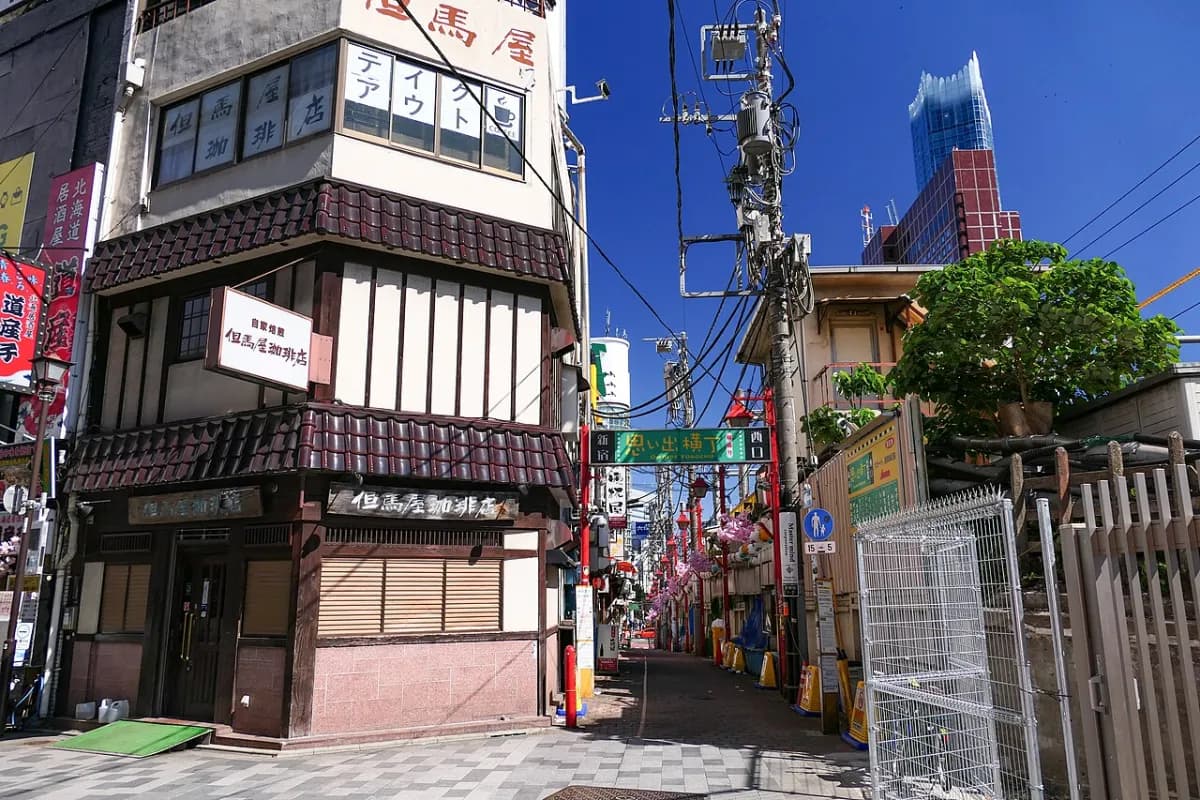
Omoide Yokocho (思い出横丁): This narrow alley of tiny food stalls next to Shinjuku Station's west exit is famous for yakitori, but several stalls also serve excellent gyoza. The atmosphere -- smoke drifting between cramped wooden stalls, lanterns swaying, salarymen squeezed elbow-to-elbow -- is unforgettable.
West exit underground area: The network of restaurants and bars in the buildings immediately west of the station includes several standing-style spots with gyoza on the menu.
Nishi-Shinjuku side streets: Heading west from the station toward the skyscraper district, the first few blocks of smaller buildings hide numerous tiny restaurants where gyoza is a staple.
Practical info
- Area: West exit of Shinjuku Station and Omoide Yokocho
- Nearest station: Shinjuku Station (West Exit), 1-3 minute walk
- Hours: Omoide Yokocho stalls open from around 16:00-17:00 until late; some lunch spots open at 11:00
- Budget: 500-1,500 yen per person (gyoza ~300-500 yen per plate, beer ~400-500 yen)
- English menu: Rare in Omoide Yokocho -- picture menus and pointing are your friends
- Insider tip: Omoide Yokocho is at its atmospheric best between 18:00 and 20:00 on weekday evenings. It gets extremely crowded on weekends and late at night. For gyoza specifically, look for stalls with a flat griddle visible from the entrance -- that is where the magic happens.
8. Late-night gyoza in Shinjuku — Dumplings past midnight
One of Shinjuku's great advantages over other Tokyo neighborhoods is that it truly never sleeps. Long after restaurants in Ginza and Marunouchi have closed, Shinjuku's Kabukicho and east side are still buzzing with open kitchens, and gyoza is one of the most popular late-night foods in the area.
Late-night gyoza in Shinjuku is a specific vibe: you have been out drinking, your energy is fading, and what you need more than anything is a plate of hot, crispy dumplings and one more cold beer. Shinjuku delivers this experience better than almost anywhere else in Tokyo.
Best areas for late-night gyoza
Kabukicho: The highest concentration of late-night restaurants in Shinjuku. Many gyoza spots here stay open until 3:00-5:00am, and a few run 24 hours. Shinjuku Hikeshi Gyoza (restaurant 4 above) is open 24 hours every day. Wander the streets east of the Toho Cinema building for the best density.
Shinjuku-Sanchome: The area around Shinjuku-Sanchome Station has several restaurants open past midnight that serve gyoza alongside ramen, fried rice, and other late-night staples.
Golden Gai adjacent: While Golden Gai itself is mostly tiny bars, the streets just outside the alley have restaurants and izakaya that serve food late, including gyoza.
Practical info
- Hours: Many spots open until 3:00-5:00am; some 24 hours
- Budget: 800-2,000 yen per person (slightly higher than daytime prices at some spots)
- Insider tip: The best late-night gyoza tends to come from places that specialize in it rather than general izakaya that happen to have it on the menu. Look for the word 餃子 prominently displayed on the sign rather than buried in a long menu. Also, Shinjuku's late-night food scene pairs perfectly with an earlier evening at a hidden izakaya in Shibuya -- just one stop away on the JR Yamanote Line.
For more adventurous late-night eating, check out our guide to the best tsukemen in Tokyo -- several top shops are within easy reach of Shinjuku.
9. Gyoza and beer combos at Shinjuku izakaya — The classic pairing
In Japan, gyoza and beer is one of the all-time great food pairings -- up there with yakitori and highballs or sashimi and sake. The cold, crisp bitterness of a Japanese draft beer against the hot, garlicky crunch of freshly fried gyoza is a combination that has fueled countless after-work evenings across Tokyo, and Shinjuku's izakaya scene delivers it brilliantly.
Rather than going to a gyoza specialist, this approach means visiting a general izakaya and making gyoza the centerpiece of a broader meal. Almost every izakaya in Shinjuku serves gyoza -- it is one of the most universally popular menu items -- and the quality at a good izakaya is often surprisingly high.
How to order the perfect gyoza-and-beer izakaya meal
- Start with beer: "Toriaezu nama" (とりあえず生) -- "draft beer for now" -- is the classic opening line
- Order gyoza immediately: Get a plate coming while you browse the rest of the menu
- Add a few izakaya staples: Edamame, karaage (fried chicken), and potato salad are the classic companions
- Second round of gyoza: If the first plate was good, order another -- this is expected and encouraged
- Finish with a highball or lemon sour to cleanse the palate
Where to find the best izakaya gyoza in Shinjuku
The streets around Shinjuku-Sanchome Station, the east side of Kabukicho, and the alleys behind the Studio Alta building all have excellent izakaya with strong gyoza. Chain izakaya like Torikizoku, where every item is a flat 410 yen (as of October 2026), offer reliable gyoza at low prices. For a more atmospheric experience, the smaller independent izakaya in the Golden Gai-adjacent area serve handmade gyoza with more character.
Practical info
- Area: Throughout Shinjuku, especially east side and Kabukicho
- Hours: Most izakaya open 17:00-midnight or later
- Budget: 2,500-4,000 yen per person for gyoza, several dishes, and 2-3 drinks
- English menu: Many larger izakaya have English or picture menus; smaller spots may not
- Insider tip: Look for izakaya advertising nomihoudai (飲み放題, all-you-can-drink) plans for 1,500-2,500 yen per 90-120 minutes. Combined with a few plates of gyoza, this is one of the best-value evenings in Tokyo. The gyoza at izakaya are almost always yaki-gyoza, but do not hesitate to ask for age-gyoza if it is on the menu -- the deep-fried version is an outstanding beer snack.
If you would rather have a local pick the izakaya and handle the ordering, our Shinjuku food tour pairs spots like these with the neighborhood's drinking alleys.
Best areas in Shinjuku for gyoza
Shinjuku is a big neighborhood, and knowing which area to target makes a real difference. Here is our breakdown:
Kabukicho (歌舞伎町): The neon-lit entertainment district northeast of Shinjuku Station is the gyoza capital of Shinjuku. The density of restaurants here is staggering, and many stay open until the early hours. Best for: late-night gyoza, gyoza crawls, variety. Try: Shinjuku Hikeshi Gyoza (open 24 hours).
Golden Gai area (ゴールデン街): The famous micro-bar district itself does not serve much food, but the streets immediately surrounding it -- particularly to the south and east -- have excellent small restaurants and izakaya with quality gyoza. Best for: atmosphere, pairing gyoza with bar-hopping.
West exit / Omoide Yokocho (西口 / 思い出横丁): The west side of the station is home to Omoide Yokocho (Memory Lane), a narrow alley of atmospheric food stalls. Several stalls serve gyoza alongside yakitori and other grilled items. Best for: quick bites, atmosphere, standing-style eating. Try: Gyoza no Anta for a sit-down table at the end of the alley.
Shinjuku-Sanchome (新宿三丁目): The area around Shinjuku-Sanchome Station, slightly east of the main station, has a more local feel with excellent small restaurants. This is where many of the dedicated gyoza specialists are located. Best for: sit-down gyoza meals, specialist shops, lunch.
Nishi-Shinjuku (西新宿): The business district west of the station has a surprising number of good lunch spots catering to office workers. Gyoza sets here tend to be filling, affordable, and fast. Best for: weekday lunch, value sets. Try: Rouhen Gyozakan (by the JR South Exit) and Shibuya Gyoza's Shinjuku Nishiguchi branch.
Tips for ordering gyoza in Shinjuku
Mix your own dipping sauce: Most gyoza restaurants provide soy sauce, rice vinegar, and ra-yu (chili oil) at the table. The classic ratio is roughly 2 parts soy sauce to 1 part vinegar with a few drops of chili oil, but experiment to find your preference. Some locals skip the soy sauce entirely and dip in straight vinegar with chili oil -- it is lighter and lets the filling flavors come through more clearly.
Order in waves: At gyoza specialists, order your first plate immediately, eat it hot, then order the next. Gyoza is best within 30 seconds of leaving the pan. A plate that sits on the table while you wait for the rest of your order will lose its crunch.
Do not overstuff your dip: Pick up one gyoza, dip just the bottom edge into the sauce, and eat in one or two bites. Submerging the whole dumpling drowns the flavor and makes the wrapper soggy.
Rice or no rice? Ordering rice with gyoza is common and no one will judge you, but at specialist shops many regulars skip the rice and just eat gyoza -- plate after plate. Both approaches are valid.
Cash is king: Many of the best gyoza spots in Shinjuku, especially the smaller and older ones, are cash-only. Always carry at least 3,000-5,000 yen in cash when doing a food crawl. Among the restaurants above, Rouhen Gyozakan takes cards, Suica and PayPay, and Shibuya Gyoza takes cards but not QR payments.
Useful Japanese for gyoza ordering:
- Yaki-gyoza (焼き餃子) -- pan-fried gyoza
- Sui-gyoza (水餃子) -- boiled gyoza
- Age-gyoza (揚げ餃子) -- deep-fried gyoza
- Hitotsu (一つ) -- one plate
- Mou ikko (もう一個) -- one more plate
- Okaeri (おかわり) -- refill / another round
- Ra-yu (ラー油) -- chili oil
FAQ
- What is the best gyoza restaurant in Shinjuku?
- Gyoza no Fukuho (餃子の福包) is our top pick for dedicated gyoza in Shinjuku. The pan-fried gyoza has a perfect crispy hane crust, juicy filling, and excellent value. For budget-conscious visitors, a plate of 6 gyoza is around 350 yen there, and a weekday lunch set was listed at around 590 yen in 2023 (check current prices). For a different style, Rouhen Gyozakan serves Chinese-style shaped dumplings, and Shinjuku Hikeshi Gyoza is open 24 hours.
- How much does gyoza cost in Shinjuku?
- A plate of 6 gyoza in Shinjuku typically costs 300-600 yen (roughly $2-4 USD). At budget chains and standing bars, prices can be as low as 200-300 yen. A full gyoza meal with drinks at an izakaya runs 1,500-3,000 yen per person. At the restaurants in this guide, a plate is 350 yen at Fukuho and Shibuya Gyoza and 470 yen at Gyoza no Anta, while Shinjuku Hikeshi Gyoza charges 880 yen for 10 pieces.
- Can I find gyoza late at night in Shinjuku?
- Yes -- Shinjuku is one of the best neighborhoods in Tokyo for late-night eating. Many gyoza restaurants in Kabukicho and the east side of Shinjuku stay open until 3:00-5:00am, and some operate 24 hours. The area around Kabukicho and Shinjuku-Sanchome has the highest concentration of late-night options. Shinjuku Hikeshi Gyoza in Kabukicho is open 24 hours every day, and Gyoza no Anta takes food orders until 23:00.
- What is the difference between yaki-gyoza and sui-gyoza?
- Yaki-gyoza are pan-fried dumplings with a crispy bottom crust -- this is the standard style in Japan. Sui-gyoza are boiled dumplings served in broth or with dipping sauce, with a softer, chewier texture. Most Shinjuku restaurants serve both, but yaki-gyoza is the default and the more popular choice.
- Are gyoza restaurants in Shinjuku vegetarian-friendly?
- Most traditional gyoza contains pork and sometimes shrimp, so standard gyoza is not vegetarian. However, some restaurants offer yasai gyoza (vegetable gyoza) with cabbage, chive, and mushroom fillings. Always ask or check the menu for yasai-gyoza (野菜餃子) if you need a meat-free option. Shinjuku Hikeshi Gyoza lists a vegetable gyoza as vegetarian on its menu, but it is not confirmed as vegan.
- Do I need a reservation for gyoza restaurants in Shinjuku?
- No. The vast majority of gyoza restaurants in Shinjuku operate on a first-come, first-served basis. Most are casual, fast-turnover spots where you rarely wait more than 10-15 minutes. The only exception might be popular izakaya on Friday and Saturday evenings.
- Are gyoza restaurants in Shinjuku non-smoking?
- It depends on the restaurant. Rouhen Gyozakan is entirely non-smoking. Gyoza no Anta allows smoking at every seat, and Shinjuku Hikeshi Gyoza has a separate area for heated tobacco only. For the others, check Tabelog or Google Maps before you go.